
Best Matcha Powder: What to Look For in 2026
Quick Picks: Best Matcha Powder by Use Case
| Use Case | Best Type | Our Pick | Price Range | Why |
|---|---|---|---|---|
| Drinking straight | Ceremonial grade | AURI Ceremonial | $25–50/30g | Smooth umami, naturally sweet, no milk or sugar needed |
| Lattes & iced drinks | Barista grade | AURI Barista | $20–35/30–50g | Bold flavor that punches through milk and ice |
| Smoothies & baking | Culinary grade | Any Japanese-origin culinary | $10–25/50–100g | Robust flavor holds up in recipes; doesn't need to be premium |
| Complete beginner | Starter kit | AURI Starter Kit | Kit price | Ceremonial matcha + whisk + scoop + bowl — everything in one box |
How to Tell Good Matcha from Bad: The 5-Second Test
| Check | Good Matcha | Bad Matcha |
|---|---|---|
| Color | Vibrant, electric green | Yellow, olive, or brown-tinged |
| Smell | Fresh, sweet, grassy | Hay-like, musty, or flat |
| Texture | Silky like eyeshadow (5–10 microns) | Gritty or sandy between fingers |
| Taste | Umami-forward, naturally sweet | Dominated by bitterness |
| Ingredients | 100% matcha (one ingredient) | Sugar, maltodextrin, "natural flavors" |
| Origin | Japan (Uji, Nishio, or Kagoshima) | Unlabeled or China |
Why Matcha Quality Matters More Than You Think
Here's a truth that the matcha market doesn't make obvious: the difference between good matcha and bad matcha is enormous. It's not a subtle, wine-snob kind of difference — it's the difference between a smooth, naturally sweet drink you look forward to every morning and a bitter, chalky green powder you have to choke down with sugar and milk.
The matcha market has exploded in popularity, and with that growth has come a flood of low-quality products marketed with buzzwords like "organic," "premium," and "ceremonial grade" that don't actually meet those standards. This guide is here to help you cut through the noise.
What Actually Makes Matcha Good: The 5 Key Factors
1. Origin
Where matcha is grown matters immensely. The gold standard regions in Japan are:
- Uji, Kyoto: The most prestigious matcha-growing region, with an 800+ year history. Uji matcha benefits from ideal climate conditions — misty mornings, temperate days, and mineral-rich soil alongside the Uji River. AURI's Ceremonial Matcha is sourced from Uji.
- Nishio, Aichi: Japan's largest matcha-producing region by volume. Produces excellent matcha, particularly in the mid-range and culinary categories.
- Kagoshima: Located in southern Kyushu, produces a slightly different flavor profile — often a bit sweeter — due to volcanic soil and warmer climate.
Red flag: "Matcha" from China is almost always regular green tea ground into powder (not true matcha made from tencha leaves). Chinese green tea powder lacks the shade-growing, de-stemming, and stone-grinding processes that define matcha. It's typically more bitter, less vibrant, and contains fewer of the beneficial compounds. If the package doesn't specify Japanese origin, be skeptical.
2. Grade
Matcha falls into two broad categories, with some nuance between them:
Ceremonial Grade is the highest quality, intended for drinking with water only (no milk or sweetener needed). It's made from the first spring harvest (ichiban-cha), using only the youngest leaves at the top of the plant. Ceremonial matcha should taste smooth with natural sweetness and prominent umami. For a complete breakdown, read our guide to matcha types.
Culinary / Barista Grade is designed for use in recipes, lattes, and blended drinks. It uses later-harvest leaves and has a more robust, astringent flavor that can stand up to milk and other ingredients. It's still real matcha (stone-ground from tencha), just a different profile.
Important: "Ceremonial grade" is not a regulated term. Any company can put it on their label. The actual quality indicators below matter more than what the label claims.
3. Color
Color is your most reliable quick indicator of matcha quality:
- Excellent: Vibrant, vivid green — almost electric. This indicates high chlorophyll content from proper shade-growing and fresh, first-harvest leaves.
- Good: Bright green with some warmth.
- Mediocre: Olive, dull green, or khaki. This usually indicates later-harvest leaves, insufficient shade-growing, or aged stock.
- Poor: Yellow-green, brown-tinged, or gray. Don't drink this.
Color degrades with exposure to light, air, and heat. Even excellent matcha will turn dull if stored improperly, which is why packaging matters (more on that below).
4. Taste and Aroma
High-quality matcha has a distinctive flavor profile:
- Umami: A savory richness that's the hallmark of shade-grown Japanese tea. This is the most important flavor note in ceremonial matcha.
- Natural sweetness: Not sugary — a subtle, round sweetness that balances the vegetal notes.
- Minimal bitterness: Some astringency is natural, but it shouldn't dominate. Excessive bitterness indicates low quality, improper preparation, or water that's too hot.
- Fresh aroma: Should smell clean, green, and slightly sweet. If it smells like hay or stale grass, it's old or low-grade.
5. Texture
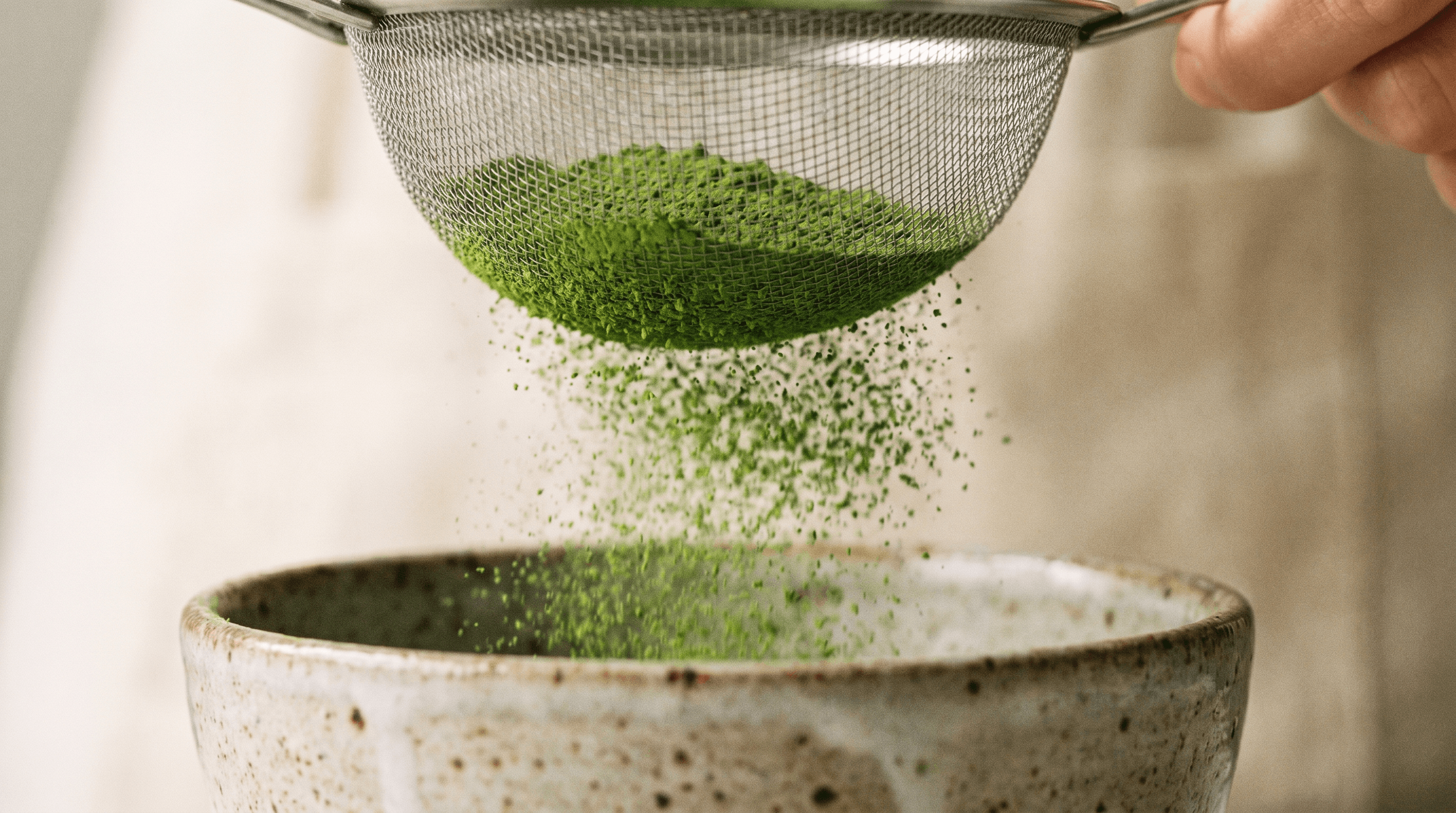
True stone-ground matcha is extraordinarily fine — particle size of 5–10 microns. When you rub it between your fingers, it should feel like eyeshadow or talc, not gritty or sandy. This fineness is what allows matcha to suspend in water and create that characteristic smooth, frothy texture when whisked.
Coarse texture is a sign that the matcha was ground with industrial methods rather than traditional stone mills, or that it includes stems and veins that should have been removed.
Red Flags: What to Avoid
Watch out for these warning signs when shopping for matcha:
Suspiciously Low Prices
Genuine ceremonial matcha cannot be produced cheaply. The shade-growing, hand-picking, de-stemming, and slow stone-grinding process is labor-intensive. If you see "ceremonial grade matcha" for $10 per 30g tin, it's almost certainly not what it claims to be.
Fair price ranges for legitimate matcha in 2026:
- Ceremonial grade: $25–$50 per 30g
- Premium barista/culinary: $20–$35 per 30–50g
- Standard culinary: $10–$25 per 50–100g
Non-Japanese Origin (Unlabeled)
If a matcha product doesn't clearly state it's from Japan, it's likely from China or another country where "matcha" is really just ground green tea. Legitimate Japanese matcha producers are proud of their origin and will always specify it.
Additives and Fillers
Check the ingredient list. It should say one thing: matcha (or green tea powder, or tencha). If you see sugar, maltodextrin, artificial colors, "natural flavors," or any other ingredient, it's not pure matcha. Some products marketed as "matcha" are actually matcha-flavored mixes with very little actual matcha.
Transparent Packaging
Matcha degrades rapidly when exposed to light. Any matcha sold in a clear bag or transparent container has been losing quality on the shelf. Look for opaque, sealed tins or pouches with resealable closures.
No Harvest Date or Lot Information
Good matcha producers include harvest information — at minimum, the year. The best provide the specific harvest season (first flush, second flush) and sometimes the farm or region. No date at all suggests the company isn't tracking freshness.
Our Recommendation: AURI Ceremonial Matcha
We obviously have a horse in this race, so here's exactly what makes AURI Ceremonial Matcha stand out:
- Origin: Single-origin, first-harvest matcha from Uji, Kyoto
- Grade: True ceremonial — made exclusively from shade-grown tencha, de-stemmed and de-veined, stone-ground
- Color: Vivid, bright green
- Taste: Smooth umami with natural sweetness, minimal bitterness
- Ingredients: 100% matcha. Nothing else.
- Packaging: Opaque, airtight tin
For lattes and blended drinks, our Barista Matcha is specifically crafted to deliver bold matcha flavor through milk without requiring the premium price of ceremonial grade.
New to matcha? The Matcha Starter Kit includes our ceremonial matcha plus all the tools you need — bamboo whisk, scoop, and bowl.
How to Store Matcha for Maximum Freshness
Even the best matcha will degrade if stored poorly. Here's how to keep your matcha fresh:
Before Opening
- Store in a cool, dark place (pantry is fine)
- Unopened matcha in proper packaging stays fresh for 6–12 months from the harvest date
After Opening
- Seal tightly after every use — air is matcha's enemy
- Store in the refrigerator in its original opaque container
- Consume within 4–6 weeks for optimal flavor and color
- Keep away from strong odors — matcha absorbs smells from its environment
- Don't freeze opened matcha — condensation when thawing introduces moisture
Signs Your Matcha Has Gone Bad
- Color has shifted from green to yellow or brown
- Smell is flat, musty, or hay-like (instead of fresh and grassy)
- Taste is excessively bitter or astringent with no sweetness
- Texture feels gritty or has hardened into clumps
Expired matcha won't make you sick, but it won't deliver the flavor or health benefits you're looking for. If your matcha has gone stale, use it for baking rather than drinking — the other ingredients in recipes can mask the degraded flavor.
How to Evaluate Matcha Like a Pro
If you want to compare different matcha brands side by side, here's a simple evaluation protocol:
- Visual inspection: Open the tin and look at the color under natural light. Compare vibrance.
- Aroma test: Bring the tin close and inhale. Note freshness vs. staleness.
- Texture test: Rub a small amount between your thumb and forefinger. Note fineness.
- Straight tasting: Prepare each matcha identically — 2g sifted, 60ml of 175°F water, whisked 15 seconds. Taste without milk or sweetener.
- Latte test: If you primarily drink lattes, repeat with your standard milk and ratio.
This side-by-side comparison is the fastest way to see why quality matters. The differences are immediately obvious.
Final Thoughts
Buying matcha in 2026 comes down to a few non-negotiable criteria: Japanese origin (preferably Uji, Nishio, or Kagoshima), single-ingredient list (just matcha), vibrant green color, and proper opaque packaging. Skip anything that doesn't check these boxes, regardless of what the label claims.
The price of good matcha — $1 to $2 per serving — is a fraction of what you'd pay at a café. And once you've had the real thing, going back to low-quality powder isn't really an option.
Start with AURI Ceremonial Matcha for the purest drinking experience, or Barista Matcha if lattes are your thing.
Frequently Asked Questions
What is the best matcha powder to buy?
The best matcha comes from Japan (specifically Uji, Kyoto or Nishio, Aichi), is ceremonial grade for drinking straight or barista grade for lattes, has a vibrant green color, and lists 100% matcha as the only ingredient. AURI Ceremonial Matcha meets all these criteria.
How can you tell if matcha powder is good quality?
Look for vibrant green color (not yellow or brown), a fine silky texture, a smooth umami taste without excessive bitterness, Japanese origin, and opaque airtight packaging. Good matcha should smell fresh and grassy, not stale or hay-like.
Is expensive matcha worth it?
Yes, within reason. Genuine ceremonial-grade matcha costs $25-50 per 30g because of the labor-intensive shade-growing, hand-picking, and stone-grinding process. The taste difference between good and cheap matcha is dramatic — it's the difference between smooth umami sweetness and harsh bitterness.
How should matcha powder be stored?
Store matcha in an airtight, opaque container in the refrigerator. Keep it away from light, heat, moisture, and strong odors. Once opened, consume within 4-6 weeks for optimal freshness. Unopened matcha can last 6-12 months when stored properly.
Related Articles
Ready to Try AURI Matcha?
Premium ceremonial-grade matcha from Uji, Kyoto.
Shop Now