
What Is Matcha? The Complete Guide
What Is Matcha, Exactly?
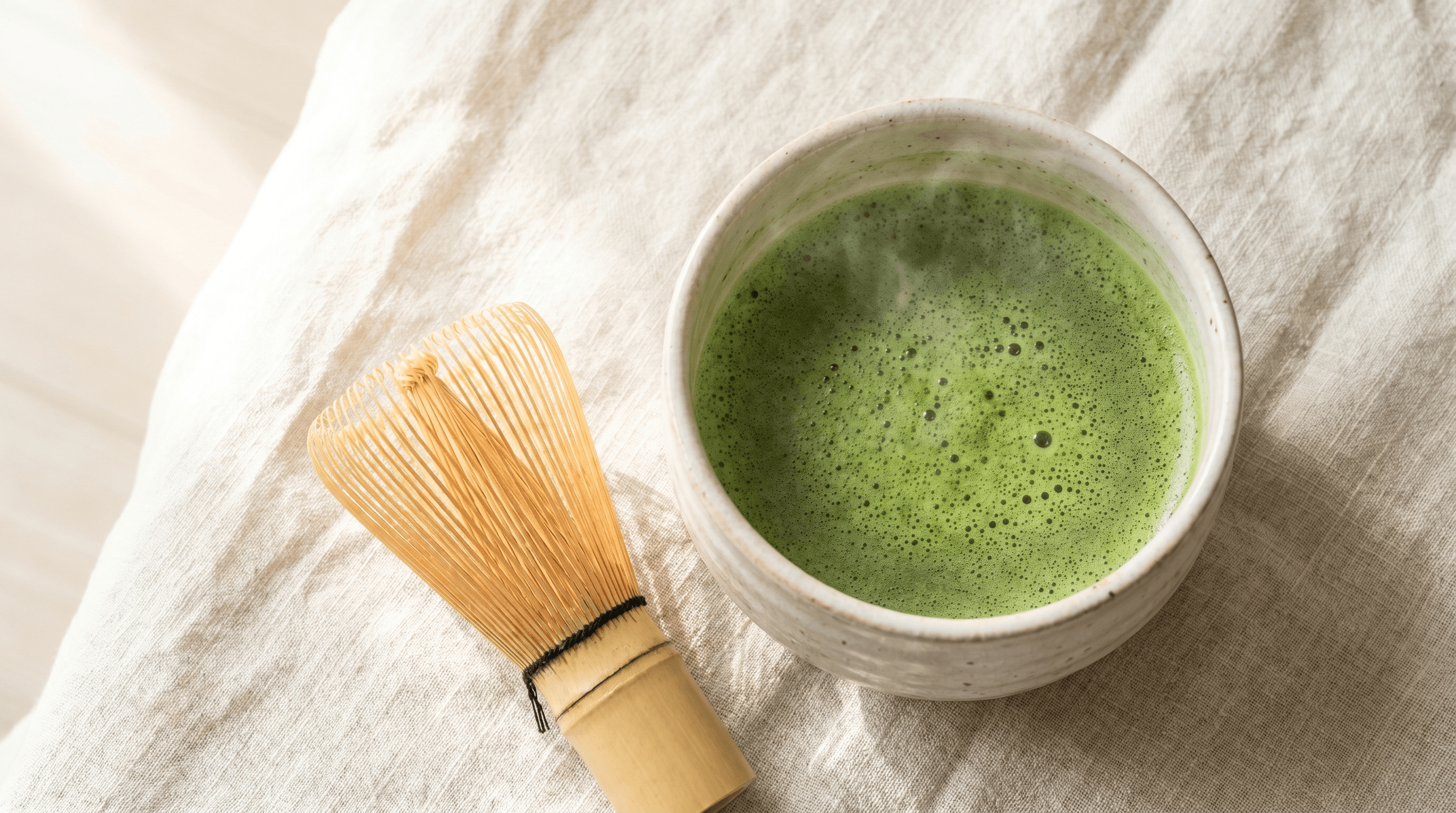
Matcha is a finely ground powder made from specially grown and processed green tea leaves. Unlike regular green tea — where you steep leaves in hot water and discard them — with matcha, you're consuming the entire leaf. This distinction is what makes matcha one of the most nutrient-dense teas in the world.
The word "matcha" translates literally to "ground tea" in Japanese (抹茶: 抹 meaning ground, 茶 meaning tea). It has been central to Japanese tea ceremony (chanoyu) for nearly a thousand years, but in the last decade it has exploded globally as both a health drink and a culinary ingredient.
The Origins: A Brief History of Matcha
Matcha's story begins in Tang Dynasty China (7th–10th century), where tea leaves were steamed and formed into bricks for storage and trade. The powdered tea preparation method was later brought to Japan by Zen Buddhist monk Eisai in 1191. He planted the first tea seeds in Kyoto and wrote Kissa Yōjōki ("How to Stay Healthy by Drinking Tea"), championing tea as a medicine for the mind and body.
Over the following centuries, the Japanese refined matcha production into an art form. The Uji region of Kyoto became — and remains — the most prestigious matcha-growing area in the world. Japanese tea masters developed the shade-growing technique, stone-grinding process, and the ceremonial preparation that define matcha as we know it today.
How Matcha Is Made: From Leaf to Powder
The production of matcha is meticulous and time-intensive. Here's the process from field to cup:
1. Shade Growing (20–30 Days Before Harvest)
About three to four weeks before harvest, tea farmers cover the plants with shade structures (traditionally straw, now often black vinyl sheets). This reduces sunlight by about 90%, which triggers a dramatic increase in chlorophyll production (giving matcha its vivid green color) and boosts levels of L-theanine, the amino acid responsible for matcha's characteristic calm-focus effect.
2. Harvesting (First Flush)
The highest-quality matcha comes from the first harvest of spring (ichiban-cha), typically in late April to May. Only the youngest, most tender leaves at the top of the plant are picked — by hand for the finest grades.
3. Steaming and Drying
Within hours of harvesting, leaves are steamed briefly to halt oxidation (preventing them from becoming black tea). They are then air-dried. At this stage, the leaves are called "aracha" (crude tea).
4. De-Stemming and De-Veining
The dried leaves are stripped of all stems and veins, leaving only the pure leaf flesh. This refined product is called "tencha" — the base material for matcha. Tencha is what separates real matcha from generic green tea powder (which is simply ground-up sencha leaves, stems and all).
5. Stone Grinding
Tencha leaves are ground into powder using traditional granite stone mills (ishi-usu). These mills turn slowly — about 40 grams per hour per mill — to avoid generating heat that would degrade the tea's color, flavor, and nutrients. This painstaking process is why genuine matcha costs more than other green teas.
Types of Matcha: Ceremonial vs. Culinary
Not all matcha is created equal. The two main categories you'll encounter are:
Ceremonial Grade
This is the highest quality matcha, intended for drinking straight (whisked with water, no additives). Characteristics include:
- Color: Vibrant, electric green
- Taste: Smooth, naturally sweet, rich umami, minimal bitterness
- Texture: Extremely fine — almost silky
- Source: Typically first harvest, youngest leaves only
- Price: Higher ($25–$50+ per 30g tin)
AURI's Ceremonial Matcha is a single-origin, first-harvest powder from Uji, Kyoto — the gold standard for this category.
Culinary Grade (Also Called "Café" or "Kitchen" Grade)
Culinary-grade matcha is designed for cooking, baking, and blended drinks like lattes and smoothies. It has a stronger, more assertive flavor that holds up when mixed with milk, sugar, or other ingredients.
- Color: Olive to yellow-green
- Taste: More astringent and robust
- Source: Later harvests, sometimes a blend of leaf positions
- Price: Lower ($15–$30 per 30–100g)
Our Barista Matcha sits at the premium end of culinary grade — bold enough for lattes, refined enough to enjoy.
Health Benefits of Matcha
Because you consume the whole leaf, matcha is nutritionally superior to steeped green tea. Here's what the research shows:
Antioxidants (EGCG)
Matcha is extraordinarily rich in catechins, particularly epigallocatechin gallate (EGCG). Studies suggest matcha contains up to 137 times the EGCG of standard green tea. EGCG is a potent antioxidant associated with reduced inflammation, cellular protection, and cardiovascular support.
L-Theanine and Calm Focus
The shade-growing process dramatically increases L-theanine, an amino acid that promotes alpha brain wave activity. L-theanine is responsible for the "calm alertness" that matcha drinkers describe — energy without jitters, focus without anxiety. This is fundamentally different from coffee's stimulation.
Metabolism and Energy
Matcha has been shown in studies to support thermogenesis (the body's rate of burning calories) and fat oxidation. Combined with moderate caffeine content, it provides sustained energy over 4–6 hours without the crash associated with coffee.
Chlorophyll and Detoxification
The shade-growing process makes matcha one of the most chlorophyll-rich foods available. Chlorophyll has been studied for its potential to support the body's natural detoxification processes.
Other Notable Compounds
- Vitamins: A, C, E, K, and B-complex
- Minerals: Potassium, calcium, magnesium, iron, zinc
- Fiber: Present because you consume the whole leaf
Caffeine in Matcha
A standard serving of matcha (2g, about 1 teaspoon) contains roughly 60–70mg of caffeine. That's about two-thirds of an 8oz cup of coffee. However, the presence of L-theanine modulates how this caffeine affects your body — delivering smooth, sustained energy rather than a spike and crash.
For a deeper dive, read our guide: Does Matcha Have Caffeine? Here's Exactly How Much.
How to Prepare Matcha
Traditional Method (Usucha — Thin Tea)
- Sift 1–2g (about 1 tsp) of matcha into a bowl (chawan) to remove clumps
- Add 60–70ml (about 2oz) of water heated to 175°F (80°C) — not boiling
- Whisk vigorously with a bamboo whisk (chasen) in a W or M motion for 15–20 seconds until a fine foam forms on the surface
- Enjoy immediately — matcha is best consumed fresh
Need the tools? Our Matcha Starter Kit includes everything listed above, plus 30g of our ceremonial matcha.
Matcha Latte
Whisk 1–2g of matcha with a small amount of hot water to create a paste. Add steamed milk (dairy or plant-based) and sweetener if desired. For a complete guide, see our matcha latte recipe.
How to Buy Good Matcha: What to Look For
The matcha market is flooded with low-quality products marketed misleadingly. Here's how to identify the real thing:
- Origin: Look for Japan-grown matcha, ideally from Uji (Kyoto), Nishio (Aichi), or Kagoshima. Be cautious of "matcha" from China, which is often regular green tea powder.
- Color: Vibrant, bright green indicates high chlorophyll content. Yellow-brown tones signal poor quality or old stock.
- Ingredient list: Should be one ingredient — 100% matcha. Avoid anything with added sugar, artificial colors, or fillers.
- Price: If ceremonial matcha costs less than $20 per 30g, something is likely off.
- Packaging: Should be in an airtight, opaque container. Light and air degrade matcha rapidly.
For an in-depth comparison, check out our guide to the best matcha powder in 2026.
Storing Matcha
Matcha is perishable. Once opened, it should ideally be consumed within 4–6 weeks. Store it:
- In an airtight container
- Away from light, heat, and moisture
- In the refrigerator (sealed tightly to prevent moisture absorption)
- Never in the freezer once opened
The Bottom Line
Matcha isn't just a trend — it's a centuries-old tradition backed by modern nutrition science. Whether you're drawn to it for the clean energy, the antioxidants, the ritual, or simply the taste, the key is starting with quality. Ceremonial-grade matcha from a reputable source will give you a completely different experience than the bargain powder on Amazon.
Ready to try the real thing? Start with AURI's Ceremonial Matcha or our all-inclusive Starter Kit.
Frequently Asked Questions
What is matcha made from?
Matcha is made from shade-grown green tea leaves (Camellia sinensis) called tencha. The leaves are steamed, dried, de-stemmed, and stone-ground into a fine powder using granite mills.
Is matcha healthier than regular green tea?
Yes. Because you consume the entire tea leaf in powder form, matcha delivers significantly more antioxidants, L-theanine, and other beneficial compounds than steeped green tea, where the leaves are discarded.
What does matcha taste like?
High-quality ceremonial matcha has a smooth, naturally sweet, umami-rich flavor with minimal bitterness. Lower grades tend to taste more astringent and grassy.
How is matcha different from green tea?
Matcha is a specific form of green tea where the entire leaf is ground into powder and consumed, versus regular green tea where leaves are steeped in water and discarded. The shade-growing process also makes matcha richer in chlorophyll and L-theanine.
Related Articles
Ready to Try AURI Matcha?
Premium ceremonial-grade matcha from Uji, Kyoto.
Shop Now