
How to Make a Matcha Latte at Home
What You Need
A great matcha latte requires surprisingly few ingredients. The quality of each one matters more than any technique.
Ingredients
- Matcha powder: 1.5–2g (about 1 teaspoon). Use a barista-grade matcha like AURI Barista Matcha for bold flavor through milk, or Ceremonial Matcha for a more delicate, nuanced latte.
- Hot water: 2 tablespoons (30ml), heated to about 175°F (80°C). Not boiling — boiling water scorches matcha and makes it bitter.
- Milk: 8oz (240ml) of your choice. More on milk options below.
- Sweetener (optional): Honey, maple syrup, or simple syrup to taste. Good matcha often needs none.
Equipment
- Small bowl or cup for whisking
- Bamboo whisk (chasen) or milk frother — our Starter Kit includes one
- Fine-mesh sieve or matcha sifter
- Mug for serving (or a glass for iced)
Hot Matcha Latte: Step by Step
Step 1: Sift the Matcha
Using a fine-mesh sieve, sift 1.5–2g of matcha into your bowl. This takes 10 seconds and makes a dramatic difference — it breaks up clumps and ensures a smooth, lump-free latte. Skip this step and you'll be chasing green lumps around your cup.
Step 2: Add Hot Water and Whisk
Pour 2 tablespoons (30ml) of 175°F water over the sifted matcha. Using your bamboo whisk, whisk vigorously in a W or M motion for about 15–20 seconds until the matcha is fully dissolved and a thin layer of fine foam appears on the surface.
This concentrated matcha "shot" is the foundation of your latte. It should look vibrant green and completely smooth.
Step 3: Heat and Froth Your Milk
Heat 8oz of milk to about 150°F (65°C). You can use a steam wand, stovetop, or microwave. If you have a milk frother, froth the milk until it's creamy and slightly foamy.
Step 4: Combine
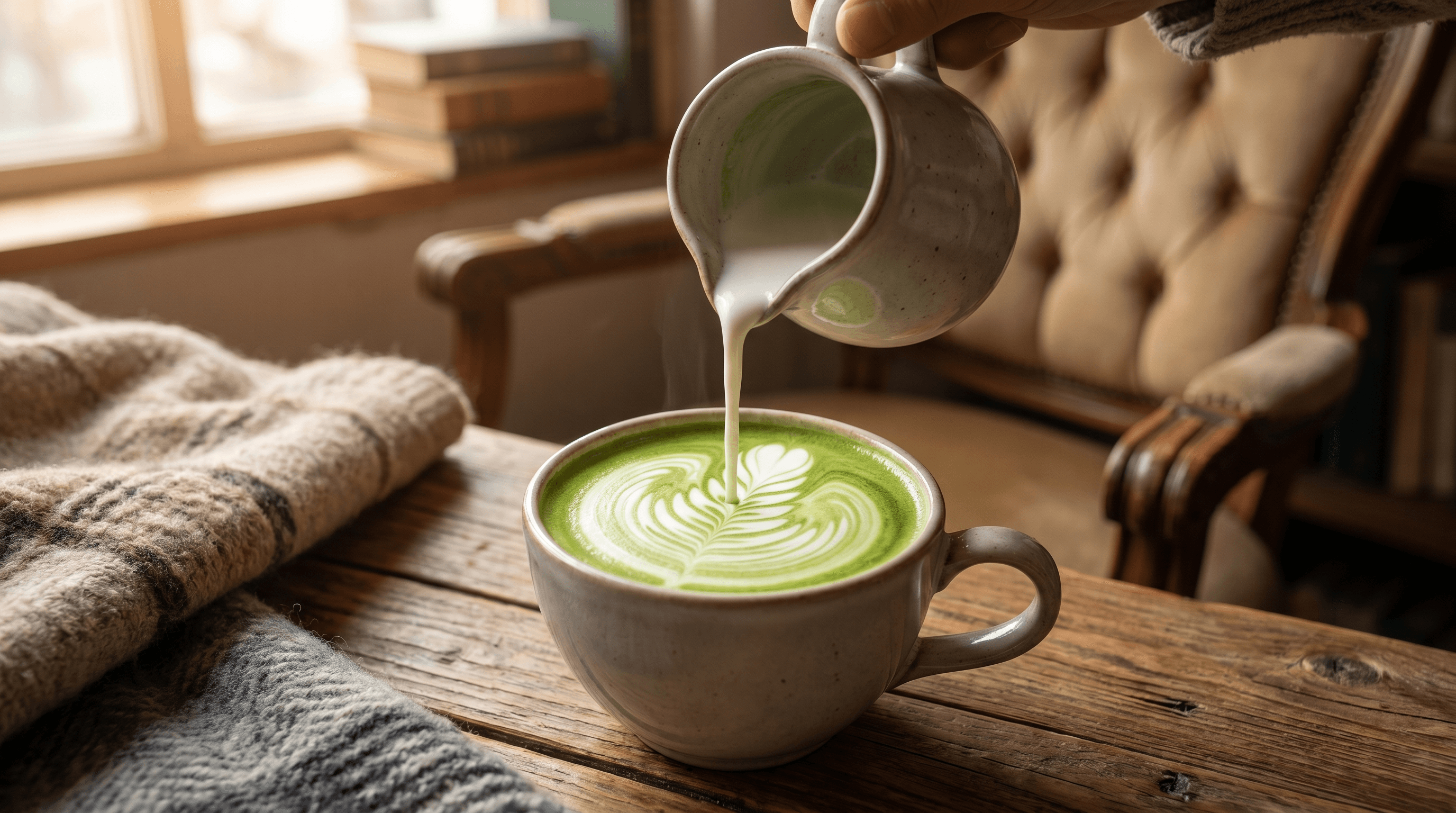
Pour the frothed milk over your matcha shot. If you want a layered look (like you see at cafés), pour slowly. For a fully integrated latte, give it a gentle stir.
Step 5: Sweeten (Optional)
Taste before sweetening. Quality matcha with good milk often doesn't need sweetener. If you do want some, add a drizzle of honey or maple syrup and stir.
Want It Iced?
The iced version uses a different technique to avoid a watery, clumpy result. We have a full guide with the classic recipe, five flavor variations (vanilla, lavender, coconut, and more), a Starbucks comparison, and nutrition info: Iced Matcha Latte: The Perfect Recipe + Variations.
If you want iced matcha without milk — just matcha, water, and ice — see How to Make Iced Matcha.
Best Milk Options for Matcha Lattes
The milk you choose meaningfully impacts both flavor and texture. Here's how the most popular options perform:
Oat Milk (Our Top Pick)
Oat milk has become the default matcha latte milk for good reason. Its natural sweetness complements matcha's umami notes, and it froths beautifully. Brands like Oatly Barista Edition are specifically designed for frothing. Oat milk's neutral, slightly sweet flavor lets the matcha character shine through.
Whole Dairy Milk
The classic choice. Whole milk's fat content creates a rich, creamy texture and microfoam. It produces the most traditional latte experience. The natural sweetness of dairy milk pairs naturally with matcha.
Almond Milk
Lower in calories, with a subtle nutty flavor that works well with matcha. Some brands froth better than others — look for barista-specific versions. Regular almond milk can be thin and separate.
Coconut Milk
Adds a tropical richness. Full-fat canned coconut milk (diluted) creates an incredibly creamy latte. Coconut's sweetness reduces the need for added sweetener.
Soy Milk
Traditional in Japanese café culture. Soy milk froths well and has a mild flavor that doesn't overpower matcha. A solid all-around choice.
Common Mistakes and How to Avoid Them
Mistake 1: Using Boiling Water
Water above 185°F scorches the delicate compounds in matcha, creating a bitter, astringent taste. Always use water around 175°F. If you don't have a thermometer, boil water and let it cool for 3–4 minutes.
Mistake 2: Not Sifting
Matcha is ultra-fine and naturally clumps due to static. Skipping the sift means spending extra time trying to whisk out lumps — or just accepting a clumpy latte. Take the 10 seconds to sift.
Mistake 3: Using Low-Quality Matcha
Culinary-grade matcha from unknown sources often tastes overly bitter, grassy, or flat. A latte made with quality matcha — like AURI Barista Matcha — will taste significantly better than one made with a budget powder. The matcha is the star ingredient; don't cheap out on it.
Mistake 4: Adding Matcha Directly to Cold Milk
Matcha won't dissolve in cold liquid. Even for an iced latte, you need to first dissolve the matcha in a small amount of hot water. Then pour that concentrate over cold milk and ice.
Mistake 5: Over-Sweetening
Many café matcha lattes are loaded with vanilla syrup and sugar, which masks the actual matcha flavor. Start with no sweetener and add only if needed. Quality matcha has its own natural sweetness.
Pro Tips for the Best Matcha Latte
- Temperature matters: For hot lattes, don't let your milk boil. 150°F is the sweet spot for flavor and froth stability.
- Ratio matters: 2g matcha to 8oz milk is a good starting point. Want it stronger? Use 2.5–3g. Lighter? Drop to 1.5g.
- Vanilla hack: Instead of flavored syrup, add a drop of real vanilla extract to the milk before heating. Subtle and elegant.
- Double-whisk technique: For extra-frothy hot lattes, whisk the matcha shot, then whisk again briefly after adding the milk.
- Ice size matters: For iced lattes, use large ice cubes — they melt slower and keep your drink from getting watered down.
Variations to Try
- Honey matcha latte: Add 1 tsp raw honey to the matcha shot while it's warm. Stir to dissolve before adding milk.
- Lavender matcha latte: Add a drop of food-grade lavender extract to the milk. Floral and calming.
- Matcha chai latte: Brew a concentrated chai tea, combine with the matcha shot, and add frothed milk.
- Coconut cream matcha: Top an iced matcha latte with a float of whipped coconut cream for a treat.
Start Making Better Matcha Lattes
The gap between a bad matcha latte and a great one comes down to two things: the matcha you use and whether you sift and whisk before adding milk. Nail those two fundamentals and you'll consistently make lattes better than most cafés.
Pick up AURI Barista Matcha for bold, latte-ready matcha, or our Starter Kit if you need the tools to go with it.
Frequently Asked Questions
What kind of matcha is best for lattes?
A high-quality culinary or barista-grade matcha works best for lattes, as it has a bold enough flavor to shine through milk. AURI's Barista Matcha is specifically designed for this purpose. Ceremonial matcha can also be used for a more delicate flavor.
Why is my matcha latte clumpy?
Matcha clumps when added directly to cold liquid or not sifted first. Always sift your matcha, then whisk it with a small amount of hot (not boiling) water first to create a smooth paste before adding milk.
Can you make a matcha latte without a whisk?
Yes. You can use a small regular whisk, a milk frother, a blender, or even shake it in a sealed jar. The key is vigorous agitation to break up clumps. A bamboo chasen gives the best results, but it's not strictly required.
Related Articles
Ready to Try AURI Matcha?
Premium ceremonial-grade matcha from Uji, Kyoto.
Shop Now