
Matcha Caffeine vs Coffee: A Data-Driven Comparison
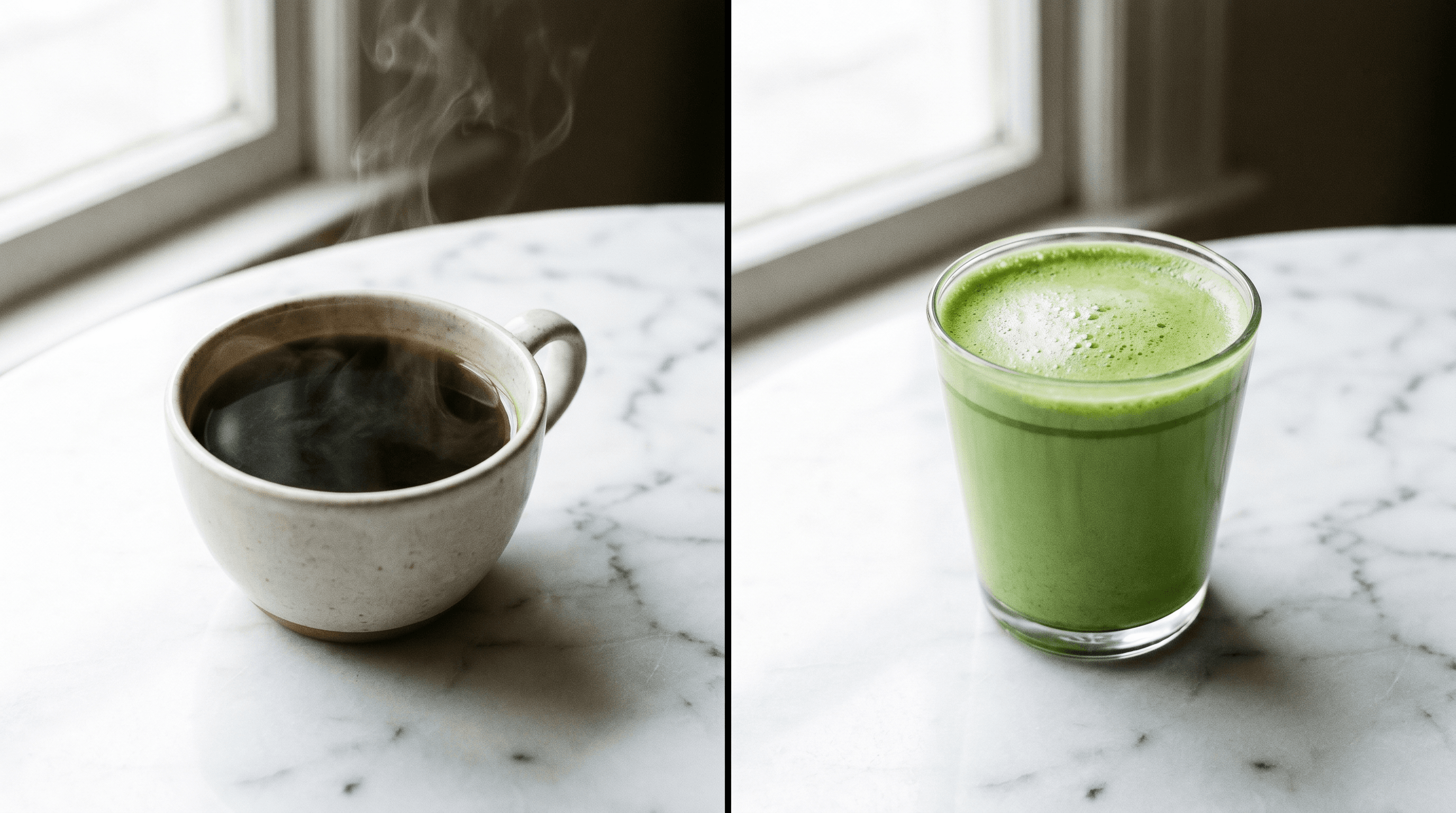
Matcha Caffeine vs Coffee: What the Numbers Actually Say
The question "does matcha or coffee have more caffeine?" sounds simple, but the answer depends entirely on how you prepare each drink. A single espresso shot and a 20oz cold brew are both "coffee," but they deliver wildly different caffeine loads. The same is true for matcha: a light bowl of thin tea and a concentrated koicha are different beverages despite sharing the same base ingredient.
This article cuts through the vague comparisons with real data — exact caffeine numbers by preparation method, the pharmacological reason matcha caffeine feels different, and a practical framework for choosing which (or both) fits your daily routine. If you're looking for broader context on whether matcha has caffeine at all, start there first.
The Caffeine Ranges: Why Both Are Wider Than You Think
Matcha: 38-176mg Per Serving
Matcha caffeine varies based on three factors: the amount of powder used, the grade of matcha, and the water volume. A standard serving uses 2g (about 1 tsp) of powder whisked into 8oz of water, which delivers roughly 60-70mg of caffeine. But that's just the midpoint of a broad spectrum.
Using less powder (1g for a lighter drink) drops you to around 38mg. Going heavier — 3-4g for a traditional thick tea (koicha) — pushes into the 100-176mg range. Ceremonial-grade matcha from first-harvest leaves tends to have slightly higher caffeine than culinary grades, because younger leaves concentrate more caffeine as a natural pest deterrent.
Coffee: 80-200mg Per Serving
Coffee's range is equally wide. A standard 8oz drip coffee lands around 80-100mg, but brewing method, bean origin, roast level, and grind size all shift the number. Light roasts retain marginally more caffeine than dark roasts (contrary to popular belief). Cold brew, steeped for 12-24 hours, can extract 150-200mg per 8oz serving. A single espresso shot (1oz) packs about 63mg into a concentrated dose.
Caffeine by Preparation: The Full Comparison
| Drink | Serving Size | Caffeine (mg) |
|---|---|---|
| Espresso (single shot) | 1 oz | 63 |
| Drip coffee | 8 oz | 80-100 |
| Cold brew | 8 oz | 150-200 |
| Thin matcha (usucha, 1g) | 8 oz | 38 |
| Standard matcha (2g) | 8 oz | 60-70 |
| Matcha latte (2g + milk) | 12 oz | 60-70 |
| Thick matcha (koicha, 4g) | 2 oz | 150-176 |
A few things stand out. A matcha latte has the same caffeine as a standard bowl of matcha — adding milk dilutes concentration but doesn't change the total caffeine from the powder. Cold brew is the highest-caffeine option on either side. And a thick koicha rivals cold brew, though koicha is traditionally consumed in much smaller volumes.
L-Theanine: The Molecule That Changes Everything
Caffeine content alone doesn't tell the full story. Matcha contains significant levels of L-theanine — typically 20-40mg per 2g serving — an amino acid almost entirely absent from coffee. L-theanine is produced during the shade-growing phase of matcha cultivation, when reduced sunlight prevents the leaves from converting L-theanine into catechins.
L-theanine crosses the blood-brain barrier and promotes alpha brain wave activity, the same brain state associated with meditation and relaxed focus. When combined with caffeine, the effects are synergistic: a 2011 study in Nutritional Neuroscience found that the L-theanine-caffeine combination improved both speed and accuracy on attention-switching tasks more than either compound alone.
Practically, this means matcha caffeine produces a different subjective experience than coffee caffeine, even at equivalent doses. Matcha drinkers typically report smooth, sustained alertness lasting 4-6 hours, while coffee's stimulation tends to peak sharply within 30-45 minutes and decline faster.
Absorption Rate and Half-Life Differences
Coffee delivers caffeine rapidly. Most of it absorbs within 15-20 minutes, with blood plasma levels peaking around 30-45 minutes post-consumption. This quick spike is what produces the immediate "hit" coffee drinkers recognize — and also what causes the crash 2-3 hours later for many people.
Matcha's caffeine absorbs more gradually. The combination of L-theanine, catechins (particularly EGCG), and the fiber content of the whole-leaf powder slows gastric absorption. Blood caffeine levels still peak, but the curve is gentler: a slower rise, a more stable plateau, and a more gradual decline.
Both beverages share the same caffeine half-life of approximately 5-6 hours (this is determined by your liver's CYP1A2 enzyme activity, not the source of caffeine). However, because matcha's peak is lower and more sustained, many people find they can drink it later in the day without the sleep disruption that an equivalent dose of coffee would cause.
Who Should Choose Matcha
Matcha is the better fit if you experience jitters, anxiety, or GI distress from coffee. The L-theanine buffer makes a meaningful difference for caffeine-sensitive individuals. It's also preferable if you need sustained focus over several hours — writing, studying, long creative sessions — rather than a quick burst of energy.
People who drink coffee and experience an energy crash by early afternoon are prime candidates for switching at least that second cup to matcha. The alkaline pH of matcha (compared to coffee's acidity at pH 4.5-5.0) is also gentler on the stomach, making it a better option for those with acid reflux or gastritis.
If you want to try high-quality matcha as your coffee alternative, AURI Ceremonial Matcha is first-harvest, stone-ground from pure tencha — the grade that delivers the best L-theanine-to-caffeine ratio.
Who Should Choose Coffee
Coffee remains the better tool when you need maximum caffeine delivery as fast as possible — early mornings, pre-workout, or fighting acute fatigue. The rapid absorption is a feature, not a bug, in these contexts. Coffee also has its own body of research supporting benefits: improved physical performance, reduced risk of Parkinson's disease, and protective effects on the liver.
If you've been drinking coffee for years without side effects and enjoy the taste, there's no health reason to quit. The "matcha is better than coffee" narrative oversimplifies what are genuinely two different tools for different situations.
Can You Drink Both in a Day?
Absolutely — and many people do. The strategy that works well for a lot of caffeine users: coffee in the morning (when you want fast activation) and matcha in the afternoon (when you want sustained focus without disrupting sleep). A morning drip coffee (~95mg) plus an afternoon matcha (~65mg) totals roughly 160mg, well within the FDA's 400mg daily recommendation for healthy adults.
The key is tracking your total daily intake. If you're having two large coffees already (200-250mg) and adding matcha on top, you could approach or exceed comfortable limits, especially if you're smaller in body weight or have slower caffeine metabolism (genetically determined by CYP1A2 variants).
Caffeine Sensitivity: How to Calibrate
Caffeine sensitivity varies widely across individuals. About 10% of the population are "hyper-sensitive," meaning even 50mg produces noticeable side effects like rapid heartbeat, anxiety, or insomnia. Another 10-15% are "hypo-sensitive" and can consume 300mg+ with minimal effect. Most people fall in the middle.
If you're caffeine-sensitive, matcha offers a practical advantage: you can easily adjust the dose by using less powder. Half a teaspoon (1g) gives you about 35-38mg of caffeine — roughly equivalent to a cup of green tea but with the added benefit of L-theanine. This level of control is harder with coffee, where extraction variables make precise dosing less predictable.
For a more detailed look at how matcha and coffee compare beyond just caffeine — including antioxidants, cost, and daily routines — see our full comparison guide.
The Bottom Line
Matcha caffeine and coffee caffeine are the same molecule, but they deliver meaningfully different experiences. Coffee hits fast and hard (80-200mg absorbed in 15-20 minutes). Matcha hits slower and steadier (38-176mg absorbed over 30-60 minutes, buffered by L-theanine). Neither is categorically "better" — the right choice depends on your caffeine sensitivity, timing needs, and what kind of energy you're optimizing for.
If you haven't tried high-grade matcha as a caffeine source, the difference from coffee is worth experiencing firsthand. Start with AURI Ceremonial Matcha — 2g whisked in hot water, no sweetener — and pay attention to how the energy curve feels compared to your morning coffee. The data says the caffeine is comparable. Your body will tell you the experience isn't.
Frequently Asked Questions
How much caffeine is in matcha compared to coffee?
A standard serving of matcha (2g whisked in 8oz of water) contains about 60-70mg of caffeine, while an 8oz cup of drip coffee contains roughly 80-100mg. However, both ranges widen dramatically depending on preparation: matcha can range from 38mg (thin usucha) to 176mg (double-scoop koicha), and coffee from 63mg (single espresso) to 200mg (cold brew concentrate).
Why does matcha caffeine feel smoother than coffee?
Matcha contains high levels of L-theanine (typically 20-40mg per serving), an amino acid that promotes alpha brain wave activity. L-theanine slows the absorption rate of caffeine and stimulates GABA production, which creates a calm, focused alertness rather than the rapid spike and crash associated with coffee.
Can you drink both matcha and coffee in the same day?
Yes, as long as your total caffeine stays within the FDA's recommended 400mg daily limit for healthy adults. A morning coffee (95mg) plus an afternoon matcha (65mg) totals about 160mg — well within safe range. Many people use this combo strategically: coffee for the morning jumpstart, matcha for sustained afternoon focus without disrupting sleep.
Is matcha better than coffee for people sensitive to caffeine?
For many caffeine-sensitive individuals, yes. The L-theanine in matcha modulates caffeine's stimulatory effects, reducing jitters, anxiety, and heart rate elevation that sensitive people often experience with coffee. Starting with a light preparation (1g matcha, ~35mg caffeine) can provide gentle energy without the side effects.
Related Articles
Ready to Try AURI Matcha?
Premium ceremonial-grade matcha from Uji, Kyoto.
Shop Now