
Matcha vs Coffee: Which One Is Actually Better?
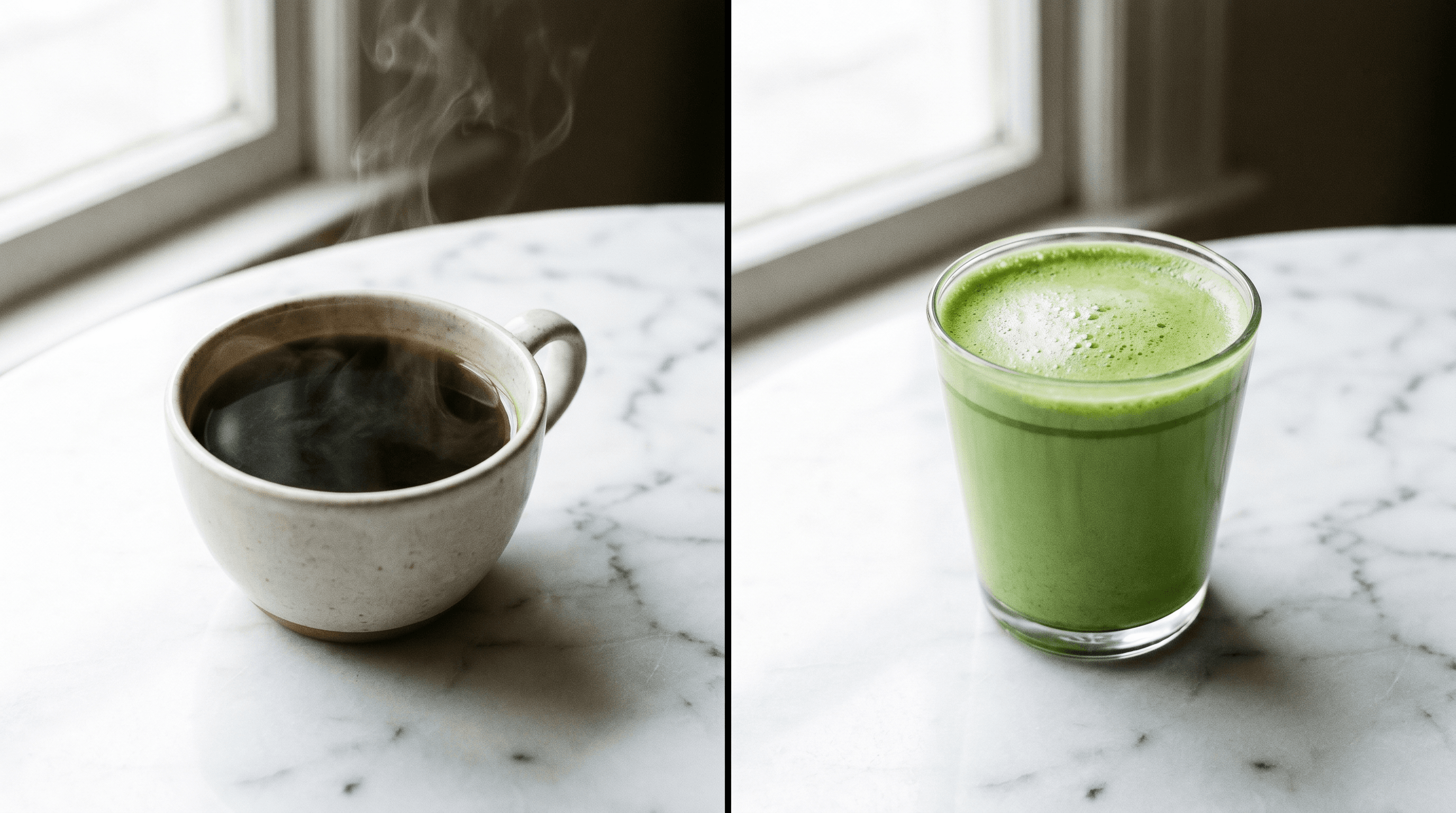
Let's Get This Out of the Way: Coffee Is Great
This isn't an anti-coffee article. Coffee is one of the most studied, most enjoyed beverages on the planet. It tastes incredible, it has real health benefits, and for many people it's a non-negotiable part of the morning. We respect that.
But if you've ever wondered whether matcha might work better for your body, your energy, or your health — or if you've experienced the downsides of coffee (jitters, crashes, acid reflux, disrupted sleep) — this comparison is for you. We'll go point by point, backed by what the research actually says.
Caffeine: How Much Is in Each?
The most common question people ask when comparing matcha and coffee is about caffeine. Here's the straightforward answer:
- Matcha (2g serving): ~60–70mg of caffeine
- Drip coffee (8oz): ~95mg of caffeine
- Espresso (1 shot): ~63mg of caffeine
So coffee wins on raw caffeine content — about 30% more per standard serving. But as we'll see in the next section, milligrams only tell half the story. For a deeper dive into the numbers, see our full guide on matcha caffeine content.
Energy Quality: This Is Where Matcha Pulls Ahead
Here's the thing that no caffeine comparison chart captures: how the energy feels. Coffee and matcha deliver caffeine to your brain through fundamentally different mechanisms, and the difference is dramatic.
Coffee's Energy Profile
Coffee hits fast. Caffeine is absorbed quickly, peaks in about 30–45 minutes, and then drops off. For many people, this creates a familiar cycle: a burst of alertness followed by an energy dip 3–4 hours later. The solution? Another cup. And then another. This rollercoaster is what people mean when they talk about being "dependent" on coffee.
Coffee's caffeine can also trigger cortisol and adrenaline release, which is why it sometimes causes jitters, anxiety, increased heart rate, and a wired-but-tired feeling.
Matcha's Energy Profile
Matcha contains L-theanine — an amino acid found almost exclusively in tea plants — in unusually high concentrations (about 40–60mg per serving). L-theanine crosses the blood-brain barrier and promotes alpha brain wave activity, the brain state associated with calm focus and creativity.
When L-theanine and caffeine work together, the result is what researchers describe as "alert relaxation":
- Smooth onset: Energy builds gradually over 30–45 minutes
- Sustained plateau: Steady focus and alertness for 4–6 hours
- No crash: Energy tapers off gently instead of falling off a cliff
- No jitters: L-theanine takes the anxious edge off caffeine's stimulant effect
A 2008 study in Nutritional Neuroscience found that combining L-theanine with caffeine improved both speed and accuracy on cognitive tasks better than either compound alone. This synergy is unique to matcha — coffee doesn't have it.
The Full Comparison Table
| Factor | Matcha | Coffee |
|---|---|---|
| Caffeine per serving | 60–70mg | ~95mg (drip), ~63mg (espresso) |
| Energy duration | 4–6 hours, smooth | 2–4 hours, spike and dip |
| L-theanine | 40–60mg per serving | None |
| Jitters / anxiety | Rare (L-theanine counteracts) | Common at higher doses |
| Crash | Minimal to none | Typical 3–4 hours after |
| Key antioxidant | EGCG (catechin) | Chlorogenic acid |
| ORAC antioxidant score | ~1,384 per gram | ~300 per gram (brewed) |
| Acidity (pH) | ~7 (neutral) | 4.5–5.5 (acidic) |
| Stomach friendliness | Generally gentle | Can cause reflux and irritation |
| Teeth staining | Minimal | Significant |
| Calories (plain) | ~5 per serving | ~2 per serving |
| Cost per serving (at home) | $1.20–$2.00 | $0.50–$1.00 |
| Prep time | 2–3 minutes | 2–5 minutes (method dependent) |
Health Benefits: Side by Side
Both matcha and coffee have legitimate, research-backed health benefits. Here's how they compare across the major categories.
Antioxidants
Matcha is one of the most antioxidant-rich foods ever measured. Its star compound is EGCG (epigallocatechin gallate), a catechin with potent anti-inflammatory and cellular-protective properties. Matcha contains up to 137 times the EGCG of standard steeped green tea.
Coffee's primary antioxidant is chlorogenic acid, which supports cardiovascular health and blood sugar regulation. Coffee is actually the largest source of antioxidants in the average Western diet — not because it's the most antioxidant-rich food, but because people drink so much of it.
Edge: Matcha. On a per-serving basis, matcha delivers significantly more antioxidants. Its ORAC score is roughly 4–5x higher than brewed coffee.
Heart Health
Both beverages are associated with cardiovascular benefits. Coffee consumption is linked to reduced risk of heart disease in moderate amounts (3–4 cups per day). Matcha's EGCG has been shown to support healthy cholesterol levels and blood vessel function. The catechins in matcha may also help reduce blood pressure.
Edge: Roughly equal, with different mechanisms. Both contribute positively when consumed in moderation.
Metabolism and Weight Management
Coffee boosts metabolic rate and is one of the few natural substances proven to enhance fat burning. Matcha has similar thermogenic effects, and studies suggest EGCG specifically supports fat oxidation — particularly during exercise.
Edge: Slight edge to matcha, due to EGCG's targeted fat oxidation effects combined with caffeine. But both are effective.
Brain Function and Focus
Coffee improves alertness, reaction time, and short-term focus. Matcha does the same, plus adds L-theanine's calming effect — improving both focus and accuracy, reducing the anxious edge that sometimes comes with caffeine alone.
Edge: Matcha. The L-theanine + caffeine combination outperforms caffeine alone in cognitive studies.
Gut Health and Digestion
Coffee's acidity (pH 4.5–5.5) can irritate the stomach lining, worsen acid reflux, and stimulate gastric acid production. It's one of the most common dietary triggers for GERD. Matcha is nearly pH-neutral (~7) and generally much easier on the digestive system. The catechins in matcha also have prebiotic-like effects that may support gut bacteria.
Edge: Matcha, especially for anyone with acid reflux or sensitive digestion.
Cost Comparison: An Honest Look
Let's not pretend matcha is cheaper — it's not, at least upfront.
At Home
- Quality matcha: $1.20–$2.00 per serving (using ceremonial-grade matcha like AURI)
- Specialty coffee beans: $0.50–$1.00 per cup
At a Cafe
- Matcha latte: $5–$8
- Coffee / espresso drink: $4–$7
Matcha costs roughly 2x coffee per serving at home. But consider this: many coffee drinkers consume 2–4 cups per day, while most matcha drinkers are satisfied with 1–2 servings (because the energy lasts longer). When you factor in total daily cost, the gap narrows considerably.
Also worth noting: making matcha at home with a quality starter kit costs a fraction of daily cafe visits for either drink.
Environmental Impact
This category gets less attention but matters if sustainability is part of your decision.
Water Usage
Coffee is famously water-intensive. It takes roughly 140 liters of water to produce one cup of coffee (accounting for growing, processing, and brewing). Tea production uses significantly less water — estimated at about 30 liters per cup.
Carbon Footprint
Coffee beans are typically grown in tropical regions and shipped globally, often after energy-intensive roasting. Tea production generally has a smaller carbon footprint per serving, though matcha's stone-grinding process adds some energy cost.
Land Use
Tea plants are perennial and productive for decades, making efficient use of agricultural land. Coffee farming, particularly in shade-grown varieties, can support biodiversity but also contributes to deforestation in some regions.
Edge: Matcha has a smaller environmental footprint per serving by most measures.
Which Is Better For...
Neither matcha nor coffee is universally "better." The right choice depends on what you need.
Morning Focus and Productivity
Choose matcha. The L-theanine + caffeine combination provides sustained focus without the spike-and-crash pattern. You stay sharp for 4–6 hours instead of reaching for a second cup by 10am.
Quick Energy Boost
Choose coffee. If you need to feel alert fast — before an early meeting or a workout — coffee's faster caffeine absorption gives you a quicker hit.
Afternoon Pick-Me-Up
Choose matcha. Coffee after noon disrupts sleep for most people. Matcha's lower caffeine and smoother release make it a safer afternoon option that's less likely to affect your sleep at night.
Pre-Workout Energy
Either works. Coffee gives a faster jolt; matcha provides steadier energy with less stomach discomfort. If your workouts are longer (60+ minutes), matcha's sustained release may be preferable.
Sensitive Stomach or Acid Reflux
Choose matcha. Its neutral pH and lack of gastric-acid-stimulating compounds make it dramatically easier on the digestive system.
Social and Ritual Enjoyment
Both are excellent. Coffee culture and matcha ceremony each offer their own rich traditions. If the ritual of preparation matters to you, matcha's traditional whisking process is meditative and intentional — a moment of calm before a focused day.
Can You Drink Both?
Absolutely. Matcha and coffee aren't mutually exclusive. Some people drink matcha in the morning for sustained focus, then have a coffee socially in the afternoon. Others switch to matcha on weekdays and enjoy specialty coffee on weekends. As long as you stay within the FDA's recommended 400mg of caffeine per day, combining them is perfectly fine.
That said, many people who try quality matcha find themselves naturally drinking less coffee — not because they force the switch, but because the energy from matcha covers more of the day without needing a refill.
The Bottom Line
Coffee delivers more raw caffeine per serving and costs less. It's a perfectly good drink that billions of people enjoy daily. No argument there.
Matcha delivers smoother, longer-lasting energy, significantly more antioxidants, L-theanine for calm focus, and a gentler experience on your stomach and teeth. It costs more per serving but requires fewer servings per day.
If you've been coffee-only and you're curious about the difference, the best test is a week with quality matcha. Not the cheap stuff from a random Amazon listing — real, ceremonial-grade matcha whisked properly. That's the only fair comparison. And if you're not sure where to start, our Starter Kit has everything you need for day one.
Frequently Asked Questions
Is matcha healthier than coffee?
Matcha has a stronger nutritional profile overall — more antioxidants (particularly EGCG), L-theanine for calm focus, and chlorophyll. Coffee has its own benefits, including chlorogenic acid and metabolism support. But gram for gram, matcha delivers more health-promoting compounds.
Does matcha have more caffeine than coffee?
No. A standard serving of matcha contains about 60-70mg of caffeine, compared to roughly 95mg in an 8oz cup of coffee. However, matcha's caffeine is released more gradually thanks to L-theanine, which provides smoother, longer-lasting energy without jitters or a crash.
Can I drink matcha and coffee on the same day?
Yes, as long as your total caffeine stays within the FDA's recommended limit of 400mg per day for most adults. Many people have a matcha in the morning and a coffee later, or vice versa. Just be mindful of how caffeine affects your sleep if you're consuming it after noon.
Why do people switch from coffee to matcha?
The most common reasons are avoiding the jitters and afternoon crash that coffee causes, wanting smoother and longer-lasting energy, reducing acid reflux or stomach irritation, and getting more antioxidants. The L-theanine in matcha fundamentally changes how caffeine feels in your body.
Related Articles
Ready to Try AURI Matcha?
Premium ceremonial-grade matcha from Uji, Kyoto.
Shop Now