
The Complete Guide to Matcha Sifters (And Why You Need One)
What Is a Matcha Sifter?
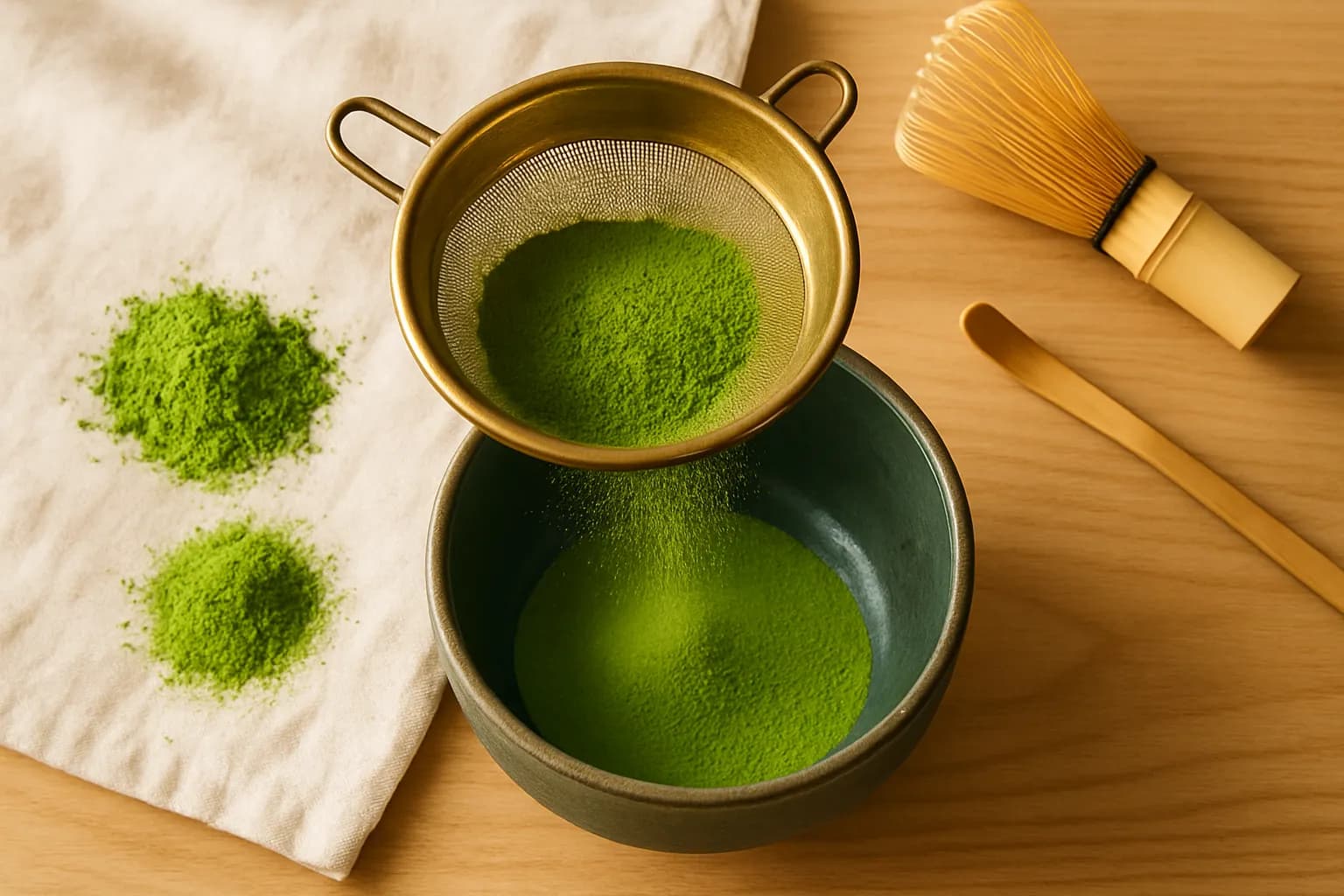
A matcha sifter is a fine-mesh strainer designed to break up clumps in matcha powder before whisking. It ensures your matcha dissolves smoothly into water, creating that signature frothy texture without lumps.
Matcha powder naturally clumps due to its ultra-fine particle size and tendency to absorb moisture. Even the highest-quality ceremonial grade matcha from Uji, Kyoto will clump over time. That's where a sifter becomes essential.
Traditional Japanese matcha preparation always includes a sifting step. While modern matcha drinkers sometimes skip it, sifting makes a noticeable difference in texture and taste.
Why Do You Need to Sift Matcha Powder?
Matcha powder particles measure between 5-20 microns, finer than flour or cocoa powder. This ultra-fine texture is what gives matcha its smooth mouthfeel, but it also means the powder attracts moisture and sticks together.
When you skip sifting, those clumps don't fully dissolve during whisking. You end up with a gritty texture and uneven flavor distribution. Some sips taste intensely grassy, while others are weak and watery.
Sifting breaks up clumps before they hit the water. This creates uniform particle distribution, which means:
- Smoother, creamier texture with no grit
- Better foam when whisking (more surface area for air incorporation)
- Consistent flavor in every sip
- Faster dissolution and easier whisking
- More vibrant green color without dark specks
Even if you're making a quick matcha latte instead of traditional tea, sifting prevents powder pockets that stick to your blender or whisk.
What Are the Different Types of Matcha Sifters?
Traditional Bamboo Sifters (Furui)
The traditional Japanese matcha sifter is called a furui. It features a woven bamboo frame with a fine mesh screen, typically made from stainless steel or silk.
These sifters usually measure 2-3 inches in diameter and come with a bamboo or wooden spatula to press the powder through. They're designed to sift directly over your tea bowl (chawan) for ceremonial preparation.
Bamboo sifters offer an authentic experience and beautiful aesthetic, but they require more care. The bamboo can warp if it gets too wet, and the mesh may need replacement over time.
Stainless Steel Mesh Strainers
Modern matcha sifters often use all-metal construction with a stainless steel frame and ultra-fine mesh. These are more durable than bamboo and easier to clean.
Look for 80-100 mesh size (the number of openings per linear inch). Anything coarser won't catch the smallest clumps. Many come with a lid that doubles as a press for pushing powder through.
Stainless steel sifters typically last longer and can go in the dishwasher, though hand washing extends their life.
Shaker-Style Sifters
Some matcha sifters combine the sifter and storage container in one. These have a screw-on lid with an integrated mesh screen, letting you shake the powder through.
Shaker sifters work well for daily use and travel, but they're harder to clean thoroughly. Matcha powder can get stuck in the threads and mesh corners.
Single-Serving Sifters
Small handheld sifters designed for one serving (1-2 grams) are portable and convenient. They often include a small spoon or scoop attached to the lid.
These are perfect if you're making matcha at the office or traveling, but less efficient if you're preparing multiple servings.
How Do You Use a Matcha Sifter?
The basic sifting technique works for any sifter type. Here's the proper method:
Place your sifter over your tea bowl, mug, or container. Measure your matcha powder (typically 1-2 grams or about half a teaspoon) and add it to the sifter.
Use the back of a spoon, small spatula, or the sifter's included tool to gently press and push the powder through the mesh. Move in circular motions, applying light pressure.
Don't force large clumps through. If you encounter hard chunks, break them up with your tool first, then continue pressing. Very hard clumps might indicate old or improperly stored matcha.
Tap the side of the sifter gently to help the powder fall through. Within 15-30 seconds, all the powder should pass through, leaving only tiny residue or impurities behind.
If using a shaker-style sifter, seal the lid and shake vigorously for 10-15 seconds, rotating the container to distribute powder evenly across the mesh.
What Should You Look for When Buying a Matcha Sifter?
Mesh Fineness
The mesh needs to be fine enough to catch small clumps but not so fine that powder takes forever to pass through. Look for mesh sizes between 80-120. Higher numbers mean finer mesh.
Test reviews often mention whether powder clogs the screen or passes through easily. This balance is crucial for daily use.
Material Quality
Stainless steel mesh lasts longer than plastic and won't absorb matcha oils or stains. Food-grade 18/8 stainless steel is the standard for quality sifters.
For bamboo frames, check that the bamboo is smooth and splinter-free. The mesh should be securely attached without gaps around the edges.
Size and Capacity
Consider how much matcha you typically prepare at once. A 2-3 inch diameter sifter works well for single servings. If you make multiple cups or matcha lattes regularly, look for 4-5 inch sifters.
The depth matters too. Deeper sifters prevent powder from spilling over the sides during sifting, especially with shaker types.
Ease of Cleaning
Matcha powder is sticky and clings to mesh. Look for sifters that disassemble easily for thorough cleaning. Avoid designs with hard-to-reach crevices where powder accumulates.
Some stainless steel sifters are dishwasher safe, but hand washing with warm water and a soft brush preserves the mesh integrity longer.
Included Tools
Many quality sifters come with a bamboo spatula, small brush, or pressing tool. These accessories make sifting easier and protect the mesh from damage.
If the sifter doesn't include a tool, the back of a small spoon works fine, but dedicated tools are gentler on the mesh.
How Do You Clean and Care for Your Matcha Sifter?
Clean your sifter immediately after each use. Matcha powder hardens when it dries, making it much harder to remove from mesh.
Rinse the sifter under warm running water, using your fingers or a soft brush to gently work powder out of the mesh. Work from the underside of the mesh, pushing residue back through the way it came.
For stubborn buildup, soak the sifter in warm water for 5-10 minutes, then brush gently. Avoid harsh scrubbing, which can damage or stretch the mesh.
Bamboo sifters should be dried thoroughly after washing. Shake off excess water and air dry completely before storing. Don't leave bamboo soaking in water or put it in the dishwasher.
Store your sifter in a dry place. Moisture exposure between uses can cause metal mesh to rust or bamboo to warp.
Can You Make Matcha Without a Sifter?
You can make matcha without a dedicated sifter, though the results won't be quite as smooth. Alternative methods include:
- Using a fine-mesh kitchen strainer or small sieve
- Whisking more vigorously to break up clumps (takes longer and may not eliminate all lumps)
- Blending matcha with liquid in a bottle or blender (helps but doesn't prevent all grittiness)
- Pressing powder through a tea strainer with a spoon
These methods work in a pinch, but they're less efficient than a proper matcha sifter. Regular kitchen strainers are usually too coarse to catch the smallest matcha clumps.
If you drink matcha regularly, investing in a dedicated sifter is worth it. Quality sifters cost between $8-25 and last years with proper care.
Does Matcha Quality Affect How Much You Need to Sift?
All matcha should be sifted, regardless of quality. However, higher-grade ceremonial matcha from reputable sources tends to clump less than lower-quality culinary grade.
Ceremonial grade matcha is stone-ground more finely and often packaged with more care to prevent moisture exposure. It typically sifts faster and produces less residue.
Culinary grade matcha, while still beneficial for cooking and lattes, is ground less finely and may have more stems or larger particles. You might notice more clumps and residue when sifting.
Storage also matters. Matcha stored improperly (exposed to air, light, heat, or moisture) clumps more readily, regardless of original quality. Always keep matcha in an airtight container in a cool, dark place.
The Modern Matcha Experience
Traditional matcha preparation teaches patience and mindfulness, but modern life doesn't always allow for ceremonial tea-making. That's where convenient options like AURI Matcha Water come in.
AURI pre-sifts and perfectly blends premium matcha into ready-to-drink format, delivering 80mg of natural caffeine with zero sugar. You get all the L-theanine and EGCG benefits of traditional matcha without the sifting, whisking, or cleanup.
Whether you choose Lemon Lift for still refreshment or Strawberry Flow for sparkling energy, you're getting real matcha prepared properly. It's launching soon—join the waitlist at drinkauri.com to be the first to try it.
That said, there's something meditative about preparing traditional matcha. If you have the time, the ritual of sifting and whisking can be as beneficial as the matcha itself.
Final Thoughts on Matcha Sifters
A matcha sifter is a small investment that dramatically improves your matcha experience. Spending 30 seconds sifting transforms gritty, uneven tea into smooth, creamy perfection.
For traditional ceremonial matcha, a bamboo furui offers authenticity and beauty. For daily convenience and durability, a stainless steel sifter is hard to beat.
Whichever type you choose, proper sifting unlocks the full potential of quality matcha powder. Your taste buds will notice the difference.
Frequently Asked Questions
Do I really need a matcha sifter or can I skip this step?
While you can make matcha without sifting, a sifter significantly improves texture and flavor. Matcha powder naturally clumps, and sifting breaks up those clumps for smoother, more consistent tea. If you drink matcha regularly, a sifter is worth the small investment ($8-25) and takes only 30 seconds to use.
What's the difference between a matcha sifter and a regular kitchen strainer?
Matcha sifters have finer mesh (80-120 mesh size) specifically designed for matcha's ultra-fine particles. Regular kitchen strainers are typically too coarse to catch small matcha clumps. Matcha sifters also include tools for pressing powder through and are sized appropriately for single servings.
How do I clean matcha powder out of my sifter's mesh?
Rinse your sifter immediately after use under warm running water, working from the underside of the mesh with a soft brush or your fingers. For stubborn buildup, soak in warm water for 5-10 minutes before brushing gently. Dry bamboo sifters completely before storing to prevent warping.
Which is better: bamboo or stainless steel matcha sifter?
Stainless steel sifters are more durable, easier to clean, and last longer. Bamboo sifters (furui) offer a traditional, authentic experience and beautiful aesthetic but require more careful maintenance. For daily use and convenience, stainless steel is recommended. For ceremonial preparation, bamboo provides the authentic experience.
Does ceremonial grade matcha need to be sifted as much as culinary grade?
All matcha should be sifted regardless of grade. Ceremonial grade matcha is ground more finely and typically clumps less than culinary grade, so it may sift faster with less residue. However, even the highest quality matcha from Uji, Kyoto will clump due to its ultra-fine particle size and moisture absorption.
Related Articles
Ready to Try AURI Matcha?
Premium ceremonial-grade matcha from Uji, Kyoto.
Shop Now