
Ceremonial vs Culinary Matcha: How to Pick the Right Grade
The Two Grades of Matcha, Explained Simply
Walk into any matcha brand's lineup and you'll see two categories: ceremonial grade and culinary grade. The names sound straightforward, but the actual differences — and which one you should buy — depend entirely on how you plan to use it.
Here's the short version: ceremonial matcha is made for drinking straight with water. Culinary matcha is made for lattes, baking, smoothies, and recipes. They come from the same plant, but they're harvested, processed, and priced differently.
Let's break down exactly what separates them.
Side-by-Side Comparison
| Ceremonial Grade | Culinary Grade | |
|---|---|---|
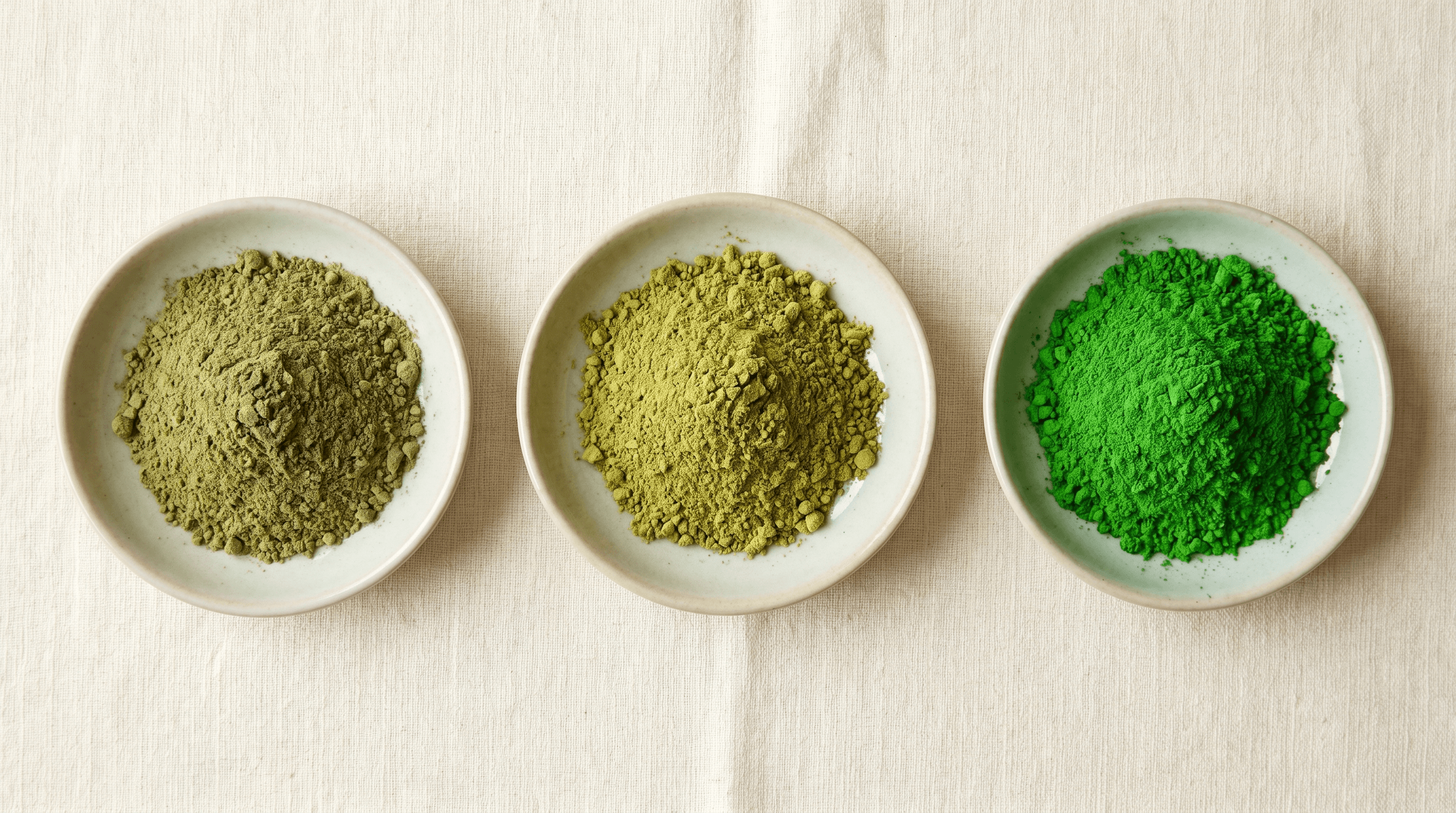
| Color | Vibrant, electric green | Olive to yellow-green |
| Taste | Smooth, sweet, rich umami | Bold, astringent, grassy |
| Harvest | First spring harvest (youngest leaves) | Second or later harvests |
| Best use | Drinking straight with water | Lattes, smoothies, baking, cooking |
| Texture | Ultra-fine, silky (5–10 microns) | Fine, slightly less smooth |
| L-theanine | Highest concentration | Moderate |
| Price (per 30g) | $25–$50+ | $10–$25 |
Both grades are real matcha — stone-ground from shade-grown tencha leaves. The difference comes down to which leaves are used and when they're harvested.
What Makes Ceremonial Grade Special
Ceremonial matcha comes from the very first spring harvest (called ichiban-cha in Japanese), using only the youngest, most tender leaves at the top of the tea plant. These leaves have been shaded for 20–30 days before picking, which floods them with chlorophyll and L-theanine.
The result is a matcha that tastes smooth and naturally sweet, with a rich umami depth and almost zero bitterness. You don't need milk or sweetener — in fact, adding them would mask the nuanced flavor that makes ceremonial grade worth the premium.
This is the grade used in traditional Japanese tea ceremony (chanoyu), where matcha is whisked with hot water and consumed on its own. AURI's Ceremonial Matcha is a single-origin, first-harvest powder from Uji, Kyoto — the most respected matcha-growing region in the world.
Best for:
- Drinking straight (whisked with water)
- Traditional tea preparation
- When you want the purest matcha experience
- Maximizing L-theanine and antioxidant intake
What Makes Culinary Grade Different
Culinary-grade matcha (sometimes labeled "barista grade" or "kitchen grade") is harvested later in the season, often from leaves slightly further down the plant. These leaves have a stronger, more assertive flavor — more astringent, more grassy, with a robust bitterness that might be unpleasant straight but becomes a feature when blended with other ingredients.
Think of it like the difference between sipping whiskey neat versus mixing a cocktail. Culinary matcha's bold flavor is designed to cut through milk, hold its own against sweeteners, and stay present in baked goods where a subtle ceremonial grade might disappear entirely.
AURI's Barista Matcha is a premium culinary-grade option — bold enough to shine in lattes, but refined enough that the flavor stays clean rather than harsh.
Best for:
- Matcha lattes (hot and iced)
- Smoothies and shakes
- Baking (cookies, cakes, mochi, brownies)
- Ice cream and frozen treats
- Any recipe where matcha is mixed with other ingredients
Can You Use Ceremonial Matcha for Lattes?
Yes — and it will taste great. A latte made with ceremonial matcha will be smoother, more delicate, and less bitter than one made with culinary grade. Some people prefer this softer profile.
But is it necessary? No. Here's why:
- Milk masks subtlety. The nuanced sweetness and umami that make ceremonial matcha special get muted when you add 8oz of oat milk and a drizzle of honey. You're paying a premium for flavors you can't fully taste.
- Culinary grade is designed for this. Its bolder flavor profile was literally developed to punch through milk and sweetener. That's its job.
- Cost adds up. If you drink a matcha latte every day, the price difference between ceremonial and culinary grade adds up to $15–$30 per month.
Our recommendation: use Barista Matcha for your daily lattes and save Ceremonial Matcha for those mornings when you want to drink it straight and really taste the tea.
Why Culinary Grade Is Better for Baking
If you're making matcha cookies, cakes, or any baked goods, culinary grade isn't just acceptable — it's the right choice. Here's why:
- Flavor survival. Baking involves heat, butter, sugar, flour, and eggs. Ceremonial matcha's delicate flavors don't survive this environment. Culinary matcha's stronger profile does.
- Color retention. While both grades lose some vibrancy when baked, culinary matcha gives you plenty of green color to work with. The difference in the final product is minimal.
- Cost efficiency. Baking recipes often call for 2–4 tablespoons of matcha. Using ceremonial grade for this would be expensive and wasteful — like cooking with a $50 bottle of wine.
For smoothies, the same logic applies. The fruit, protein powder, or yogurt in your smoothie will overpower the subtle differences between grades. Culinary matcha gives you the flavor, color, and health benefits without the unnecessary expense.
Common Misconceptions
"Culinary grade is low quality"
This is the biggest misconception. Culinary matcha from a reputable source is still real matcha — shade-grown, de-stemmed, stone-ground from tencha leaves. It's not "bad" matcha; it's a different product optimized for a different purpose. Poor-quality matcha is poor-quality matcha regardless of what grade the label claims.
"Ceremonial grade is always better"
Better for what? For drinking straight, absolutely. For a matcha latte? Not necessarily — you might actually prefer the bolder flavor that culinary grade delivers through milk. "Better" depends entirely on how you're using it.
"The grades are strictly regulated"
They're not. There's no official certification body that designates matcha as "ceremonial" or "culinary." These are industry conventions, not legal standards. This means any brand can slap "ceremonial grade" on their tin. The actual quality indicators — color, origin, harvest, and taste — matter far more than the label. For more on identifying quality, see our matcha buying guide.
"You can't tell them apart just by looking"
You absolutely can. Place ceremonial and culinary matcha side by side and the color difference is immediately obvious. Ceremonial grade is vivid, electric green. Culinary grade is noticeably more muted — olive, khaki, or yellow-green. The texture differs too: ceremonial feels silkier between your fingers.
How to Tell Them Apart: A Quick Visual Test
If you have both grades on hand, here's a simple comparison:
- Color under natural light: Ceremonial = bright, vivid green. Culinary = duller, olive-toned.
- Texture between fingers: Ceremonial = smooth like eyeshadow. Culinary = slightly grainier.
- Aroma: Ceremonial = fresh, sweet, inviting. Culinary = more grassy and vegetal.
- Taste straight (2g + 60ml water): Ceremonial = smooth, sweet, umami. Culinary = astringent, bitter, robust.
This takes two minutes and will permanently calibrate your understanding of the difference.
Which Grade Should You Buy?
Here's a simple decision framework:
- You drink matcha straight (whisked with water): Get ceremonial grade. The taste difference is dramatic and worth the price.
- You mostly make lattes: Get barista/culinary grade. It's designed for exactly this and costs less.
- You bake with matcha: Culinary grade, every time. Don't waste ceremonial on cookies.
- You do a mix of everything: Get both. Use ceremonial for straight drinking, culinary for everything else.
- You're brand new to matcha: Start with ceremonial grade whisked the traditional way. It's the best way to understand what matcha actually tastes like before you start mixing it into other things. Our complete matcha guide covers preparation step by step.
The Bottom Line
Ceremonial and culinary matcha are both real matcha — just optimized for different uses. Ceremonial is the premium experience for drinking pure. Culinary is the workhorse for lattes, recipes, and anything blended. Neither is objectively "better" — the right grade is the one that matches how you actually use matcha.
For straight drinking, start with AURI's Ceremonial Matcha. For lattes and recipes, grab our Barista Matcha. And if you're still exploring, our what is matcha guide covers everything from history to preparation.
Frequently Asked Questions
Can you use ceremonial matcha for lattes?
Yes, you can absolutely use ceremonial matcha for lattes — it will produce a smoother, more nuanced drink. However, it's not necessary. Barista or culinary-grade matcha is designed to hold its flavor through milk and sweetener, so you get a bold matcha taste at a lower price point.
Is ceremonial matcha worth the extra cost?
If you drink matcha straight with water, yes — the taste difference is dramatic. Ceremonial grade is smooth, naturally sweet, and full of umami. If you only make lattes or use matcha in recipes, a quality barista-grade matcha delivers better value.
How can you tell ceremonial and culinary matcha apart visually?
Ceremonial matcha is a vibrant, electric green color with an ultra-fine, silky texture. Culinary matcha tends to be more muted — olive green to yellow-green — and can feel slightly less fine between your fingers.
Is culinary matcha lower quality than ceremonial?
Not exactly — it's a different product for a different purpose. Culinary matcha is made from later-harvest leaves with a bolder, more astringent flavor profile that's designed to stand up to milk, sugar, and baking. It's not 'worse,' it's just optimized for recipes rather than drinking straight.
Related Articles
Ready to Try AURI Matcha?
Premium ceremonial-grade matcha from Uji, Kyoto.
Shop Now