
What Does Matcha Taste Like? A Complete Taste Guide
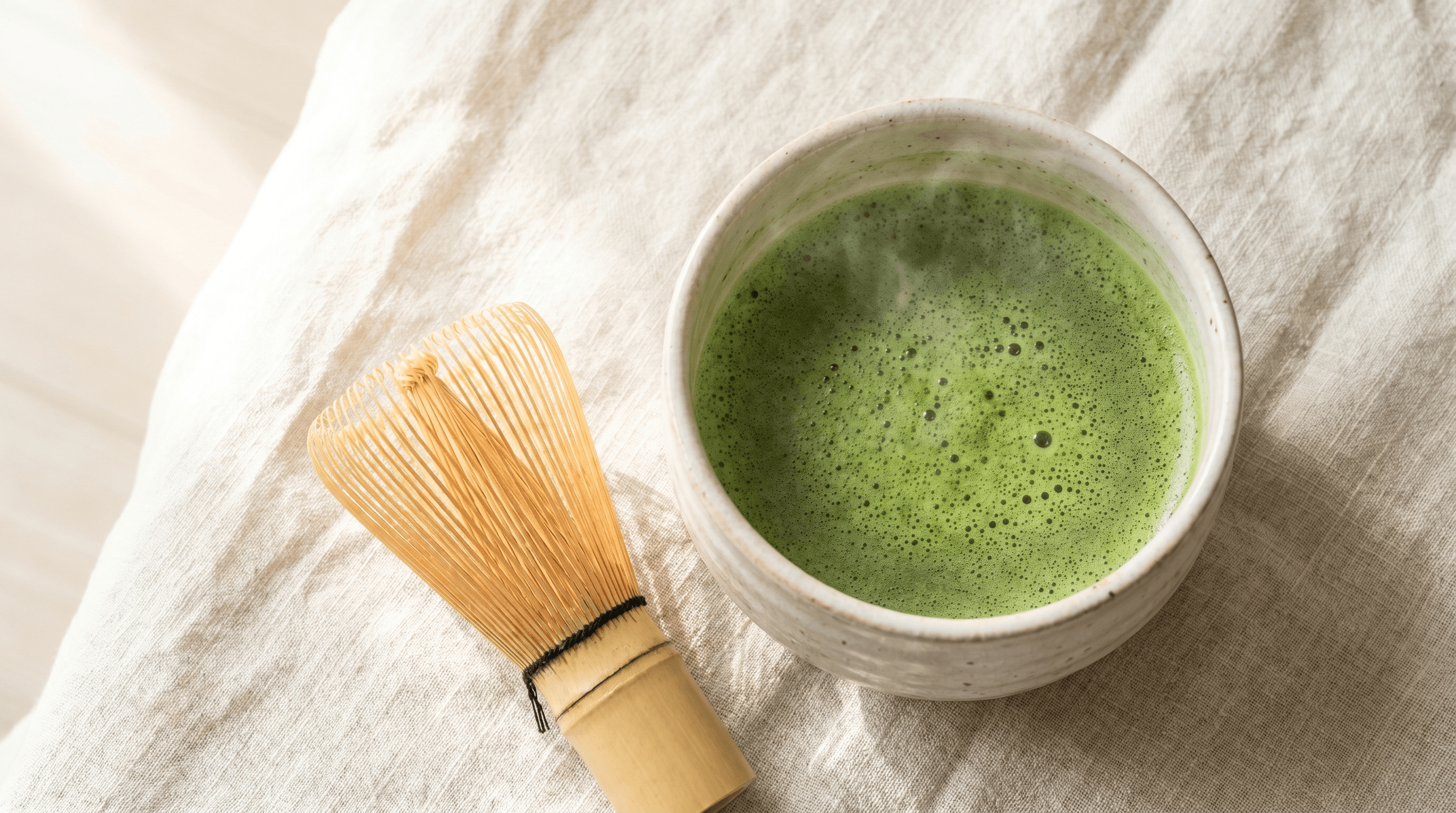
Matcha Taste at a Glance
| Grade | Primary Flavors | Bitterness | Best For | Tastes Like… |
|---|---|---|---|---|
| Ceremonial | Umami, natural sweetness, marine | Almost none | Drinking straight with water | Smooth, savory-sweet, like the richness of miso meets fresh spring greens |
| Barista / Premium | Bold vegetal, mild astringency | Pleasant bite | Lattes, iced drinks | Like a deeper, bolder green tea that holds its own against milk |
| Culinary / Low-grade | Flat bitterness, chalky | Dominant | Baking only | Like over-steeped green tea with no sweetness — needs sugar and other flavors |
The one-line answer: Good matcha tastes smooth, savory-sweet, and earthy with a rich body that coats your palate. Bad matcha tastes bitter and chalky. The grade makes all the difference.
What Does Matcha Actually Taste Like?
If you've never had matcha before, the flavor is hard to pin down with a single word — because it genuinely doesn't taste like anything else you've tried. It's not coffee. It's not regular green tea. It occupies its own category.
The best way to describe high-quality matcha is this: it tastes vegetal, smooth, and savory-sweet, with a rich body and a lingering finish that coats your palate. The Japanese call this dominant flavor characteristic umami — the fifth taste alongside sweet, sour, salty, and bitter. Umami is what gives matcha its depth and makes it satisfying in a way that most teas aren't.
But here's the catch: the matcha flavor you experience depends enormously on three things — the grade of matcha you're using, how you prepare it, and how fresh it is. A bowl of first-harvest ceremonial matcha from Uji, Kyoto tastes almost nothing like the bitter green powder in a cheap smoothie mix. They are fundamentally different experiences, even though both are technically "matcha."
The Core Flavor Notes of Matcha
Good matcha is layered. Here are the individual flavor notes you can expect from properly made, high-quality matcha:
Umami
This is the signature matcha taste — a savory, almost brothy richness similar to what you taste in aged cheese, miso soup, or seaweed. The umami in matcha comes from high concentrations of the amino acid L-theanine, which increases dramatically when tea plants are shade-grown before harvest. The longer the shading period, the more L-theanine, and the more umami in the final product.
Vegetal / Grassy
Matcha has a distinctly "green" flavor — think fresh spinach, steamed edamame, or the smell of cut grass on a spring morning. This comes from the chlorophyll that builds up during shade-growing. In high-grade matcha, this vegetal character is pleasant and fresh, not overwhelming. In lower grades, it can become harsh or weedy.
Natural Sweetness
Quality matcha has a subtle sweetness that lingers after you swallow. This isn't sugar-sweet — it's delicate, almost creamy. The sweetness is another byproduct of L-theanine and is most pronounced in first-harvest, spring-picked leaves. You should be able to drink good ceremonial matcha without adding any sweetener and still find it pleasant.
Nuttiness
Some matcha, particularly from certain cultivars and regions, carries a gentle roasted-nut undertone. This is subtle — more of a background note than a dominant flavor — but it adds complexity and rounds out the overall taste profile.
Marine / Oceanic
High-grade Japanese matcha occasionally has a faint seaweed-like quality, similar to nori. This marine note is closely tied to the umami profile and is considered desirable in traditional Japanese tea evaluation. It's gentle, not fishy.
How Matcha Grade Changes the Flavor
The single biggest factor determining what your matcha tastes like is the grade. There's a reason ceremonial matcha costs three to five times more than culinary powder — and the difference is immediately obvious on your tongue.
Ceremonial Grade: Smooth, Sweet, Umami-Forward
Ceremonial-grade matcha is made from the first spring harvest (ichiban-cha) using only the youngest, most tender leaves at the top of shade-grown plants. These leaves have the highest concentration of L-theanine and the lowest concentration of catechins (the compounds responsible for bitterness).
The result is a matcha that tastes:
- Smooth with no harshness or astringency
- Naturally sweet — drinkable with water only, no milk or sugar needed
- Rich in umami — savory depth that lingers
- Minimal bitterness — almost none when prepared correctly
- Vibrant — a clean, bright green-tea flavor that feels alive
AURI Ceremonial Matcha is sourced from first-harvest Uji leaves specifically for this flavor profile. If you've only had matcha in lattes or smoothies, tasting ceremonial-grade matcha straight with water is a completely different experience.
Barista / Premium Culinary Grade: Bold, Robust, Latte-Ready
Barista-grade matcha uses leaves from slightly later in the harvest or from lower positions on the plant. These leaves have had more sun exposure, which increases catechins and gives the matcha a stronger, more assertive flavor.
The taste is:
- More robust and bold — stands up to milk and sweeteners
- Slightly more astringent — a pleasant bite, not harshness
- Less sweet than ceremonial, but still balanced
- Deeper vegetal notes — more "green" character
This is the grade you want for matcha lattes, iced matcha, and blended drinks. The stronger flavor cuts through milk rather than disappearing into it. AURI Barista Matcha is designed exactly for this purpose — bold enough for a latte, refined enough that you'd never mistake it for cheap powder.
Low-Grade Culinary / Cooking Grade: Bitter, Flat, Astringent
At the bottom of the quality spectrum, you get matcha made from later harvests, older leaves, or — in the worst cases — ground-up sencha rather than true tencha. This matcha tends to taste:
- Bitter and astringent — unpleasant without heavy sweetening
- Flat — no umami complexity, just one-dimensional bitterness
- Chalky or gritty in texture
- Dull yellow-green rather than vibrant
This grade is fine for baking (matcha cookies, cakes, ice cream) where other ingredients compensate. It's not something you'd want to drink straight.
Why Some Matcha Tastes Bitter (And How to Fix It)
Bitterness is the number-one complaint people have about matcha, and it's almost always avoidable. Here's what causes it:
1. Low-Quality Matcha
This is the most common culprit. Cheap matcha is bitter because it's made from sun-exposed, later-harvest leaves high in catechins. No preparation technique will make low-grade matcha taste smooth. The fix: invest in genuine ceremonial or premium barista-grade matcha. The per-serving cost difference is about $1.
2. Water Temperature Too High
Boiling water (212°F / 100°C) scorches matcha and extracts bitter compounds aggressively. Matcha should be prepared with water at 160-175°F (70-80°C). If you don't have a thermometer, boil your water and let it cool for 3-4 minutes before pouring. This single adjustment can transform the taste of your matcha.
3. Stale or Oxidized Powder
Matcha is perishable. Once opened, it should be consumed within 4-6 weeks. Exposure to air, light, and heat degrades the L-theanine (sweetness and umami) while the catechins (bitterness) remain. Old matcha isn't dangerous, but it tastes significantly worse — more bitter, less sweet, and flat.
4. Too Much Matcha Per Serving
Using too much powder relative to water intensifies bitterness. The standard ratio is 1.5-2g (about one level teaspoon) to 60-70ml (2oz) of water for traditional preparation. If you're new to matcha, start on the lighter side and adjust upward as your palate develops.
5. Not Sifting Before Whisking
Clumped matcha doesn't dissolve evenly, creating concentrated pockets of powder that taste bitter on the tongue. Always sift your matcha through a fine-mesh strainer before adding water. It takes ten seconds and makes a noticeable difference.
Matcha vs. Green Tea: How Do They Taste Different?
Since matcha is made from green tea leaves, people reasonably expect them to taste similar. They don't. Here's why:
| Characteristic | Matcha | Steeped Green Tea |
|---|---|---|
| Intensity | Concentrated, full-bodied | Light, delicate |
| Umami | Prominent (high L-theanine) | Subtle to mild |
| Sweetness | Naturally sweet (good grades) | Mildly sweet, sometimes grassy |
| Body / Texture | Thick, creamy, coats the mouth | Thin, watery |
| Bitterness | Minimal in high grades | Can be tannic if over-steeped |
| Aftertaste | Long, savory-sweet finish | Clean, fades quickly |
The key difference comes down to consumption method: with green tea, you steep leaves and discard them, extracting only what dissolves into water. With matcha, you consume the entire leaf ground into powder, so you get a far more concentrated dose of every flavor compound.
Matcha vs. Coffee: A Taste Comparison
For people considering switching from coffee to matcha, the taste transition is significant. They're different drinks entirely:
- Coffee is roasted, bitter-forward, acidic, with chocolate or nutty undertones depending on the bean. Its flavor is dominated by the Maillard reaction from roasting.
- Matcha is vegetal, umami-forward, smooth, with natural sweetness. Its flavor comes from the living leaf — chlorophyll, amino acids, and catechins.
Most coffee drinkers who try matcha for the first time find it unfamiliar rather than unpleasant. The adjustment usually takes about a week. If you're transitioning, start with a matcha latte rather than straight matcha — the milk creates a bridge between the creamy richness you're used to from coffee and matcha's unique flavor profile.
What keeps people with matcha long-term is usually the energy quality: 4-6 hours of calm, sustained focus without coffee's jitters, anxiety, or afternoon crash. The taste grows on you. The energy keeps you coming back.
How Preparation Method Changes the Taste
The same matcha can taste quite different depending on how you prepare it:
Traditional (Whisked with Water)
This is matcha in its purest form — just powder and hot water, whisked into a frothy suspension. You taste the matcha's true character: umami, sweetness, vegetal notes, everything. This is how to evaluate matcha quality and why ceremonial-grade matcha exists. If you haven't tried this preparation, our Matcha Starter Kit includes everything you need.
Matcha Latte (With Milk)
Adding milk mellows matcha's vegetal edge and amplifies its creaminess. The matcha flavor becomes a rich, green backdrop to the milk's sweetness. Oat milk tends to complement matcha best — its natural sweetness and body pair well. Use barista-grade matcha for lattes; ceremonial grade can get lost behind the milk.
Iced Matcha
Cold temperature suppresses bitterness and astringency, making iced matcha taste noticeably smoother and sweeter than hot. This is an excellent entry point if you're sensitive to matcha's vegetal character. Whisk your matcha with a small amount of hot water first, then pour over ice.
Matcha in Smoothies and Blended Drinks
When blended with fruit, yogurt, or protein powder, matcha contributes an earthy depth and green color but its individual flavor notes get absorbed into the mix. Culinary-grade matcha is perfectly fine here — you don't need to use ceremonial grade when it's competing with bananas and berries.
Tips for People Who Don't Like Matcha (Yet)
If you've tried matcha and didn't enjoy it, there's a good chance the problem was the matcha, not your taste buds. Here's a practical progression for developing a taste for it:
Step 1: Upgrade Your Matcha
If your first experience was with a $10 bag from Amazon or a random cafe latte, you've never actually tasted what matcha is supposed to be. Start with a genuine, fresh, Japanese-origin matcha. The flavor difference is not subtle — it's dramatic.
Step 2: Start Cold
Make an iced matcha latte with oat milk and a small amount of honey. Cold preparation reduces bitterness, and the milk and sweetener smooth out any rough edges. This is the most approachable way to drink matcha.
Step 3: Reduce the Crutches Gradually
As you get used to the flavor, try reducing the sweetener, then the milk. Try it over ice with just water. Eventually, try a hot bowl of ceremonial matcha prepared traditionally. Most people who follow this progression end up preferring matcha with less milk and no sweetener — but it takes time.
Step 4: Focus on Water Temperature
If your hot matcha tastes bitter, the water is almost certainly too hot. Use 160-175°F water. This single change has converted more matcha skeptics than anything else.
Step 5: Give It a Week
Matcha is an acquired taste for some people — and that's normal. The vegetal, umami-forward flavor profile is unfamiliar if your palate is calibrated to coffee and sweet drinks. Most people who commit to a week of daily matcha find they start craving it. The calm energy becomes addictive in the best way.
What Fresh vs. Stale Matcha Tastes Like
Freshness has a massive impact on matcha flavor. Here's how to tell the difference:
| Fresh Matcha | Stale Matcha |
|---|---|
| Vibrant, electric green color | Dull, yellow-green or olive |
| Smooth, sweet, umami-rich | Bitter, flat, one-dimensional |
| Fresh, grassy aroma | Hay-like or musty smell |
| Silky fine texture | Gritty or clumpy |
| Pleasant, lingering aftertaste | Harsh, astringent finish |
If your matcha has been open for more than six weeks, or if it's been sitting in a clear container on a sunny shelf, there's a good chance the flavor has deteriorated. Use stale matcha for baking and replace your drinking supply with a fresh tin.
The Bottom Line
What matcha tastes like depends almost entirely on what matcha you're tasting. High-quality ceremonial matcha is smooth, naturally sweet, and rich with umami — a genuinely enjoyable drink that needs nothing added to it. Low-quality matcha is bitter, chalky, and unpleasant. The difference isn't subtle; it's the gap between a fine wine and boxed wine.
If you haven't had a good experience with matcha, the most likely explanation is that you haven't had good matcha. Start with AURI Ceremonial Matcha prepared with 175°F water and a proper whisk, or ease in with Barista Matcha in a latte. Either way, the flavor speaks for itself once the quality is there.
Frequently Asked Questions
Is matcha supposed to taste bitter?
High-quality ceremonial matcha should not taste bitter. It should be smooth with natural sweetness and umami. Bitterness usually indicates low-grade matcha, water that was too hot, or powder that has gone stale.
Does matcha taste like green tea?
Matcha has a much more concentrated, complex flavor than regular steeped green tea. While both come from the same plant, matcha is richer in umami, has a thicker body, and a more vegetal depth because you're consuming the entire leaf rather than a water extract.
How do I make matcha taste good if I don't like the flavor?
Start with a high-quality barista-grade matcha in a latte with oat or almond milk and a touch of honey. Cold preparation (iced latte or iced matcha) also mellows the flavor. As your palate adjusts, you can gradually reduce the milk and sweetener.
Why does café matcha taste different from what I make at home?
Cafés often use culinary-grade matcha mixed with sweetener and a high ratio of milk, which masks the actual matcha flavor. At home, using ceremonial-grade matcha with proper water temperature and whisking technique gives you a cleaner, more nuanced taste.
Related Articles
Ready to Try AURI Matcha?
Premium ceremonial-grade matcha from Uji, Kyoto.
Shop Now