
How to Choose and Use a Matcha Whisk for Perfect Tea
What Is a Matcha Whisk?
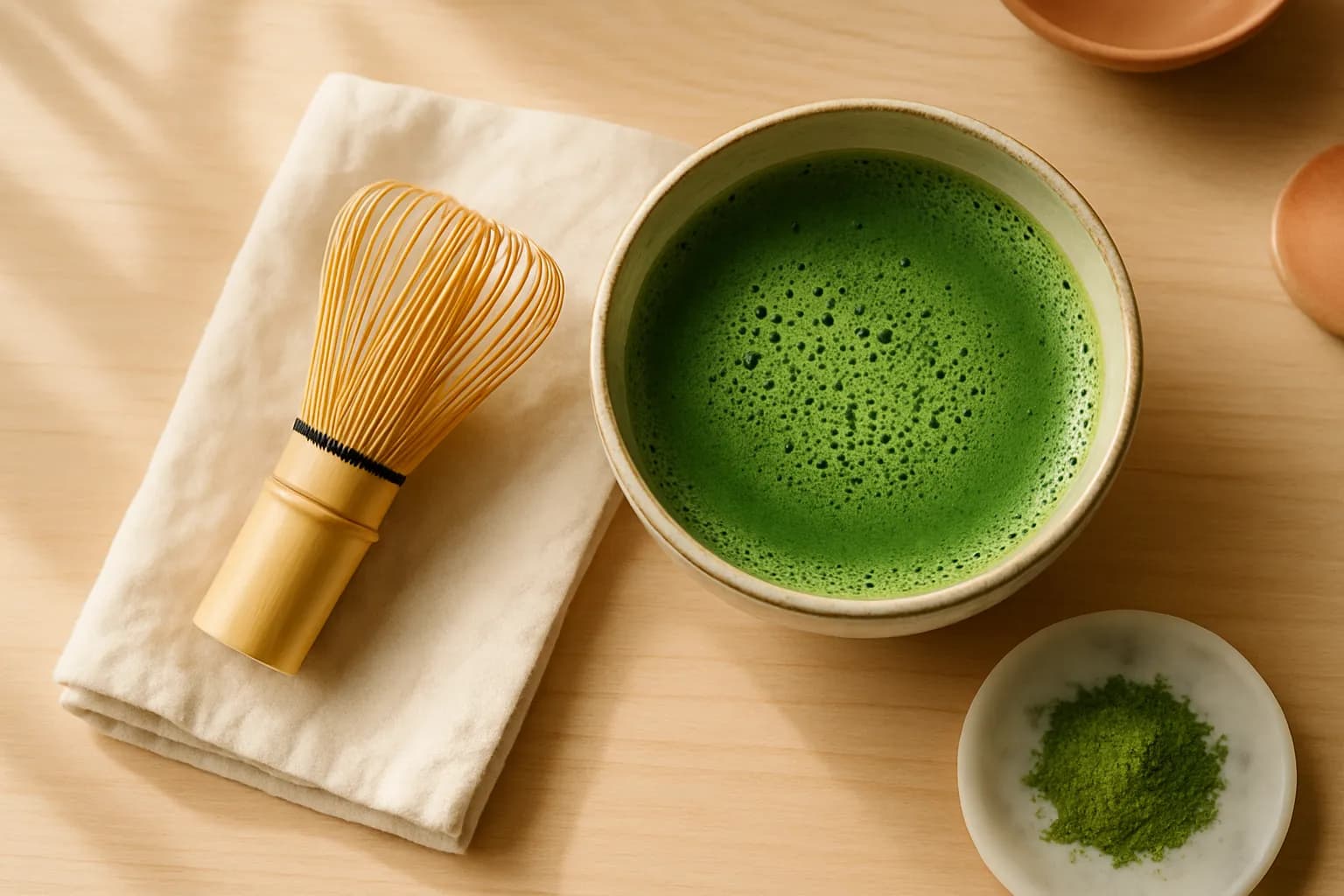
A matcha whisk, called a chasen in Japanese, is a handcrafted bamboo tool specifically designed to mix matcha powder with water. Unlike regular whisks or spoons, the chasen's delicate tines create a smooth, lump-free tea with the signature frothy layer that defines traditional matcha.
The chasen has been used in Japanese tea ceremonies for over 400 years. It's carved from a single piece of bamboo, split into dozens of fine tines that whip the matcha into suspension without damaging the delicate powder or creating a bitter taste.
If you've ever tried stirring matcha with a spoon, you know it doesn't work. The powder clumps, settles at the bottom, and you're left with a gritty, uneven drink. A proper matcha whisk solves this problem entirely.
How Many Tines Should Your Matcha Whisk Have?
Matcha whisks come in different tine counts, typically ranging from 60 to 120 prongs. The number of tines affects both the whisking performance and the type of matcha you're preparing.
For thick matcha (koicha) used in traditional tea ceremonies, a whisk with 60-80 tines works best. The thicker prongs can handle the paste-like consistency without breaking.
For thin matcha (usucha), which is what most people drink daily, look for 100-120 tines. More tines create finer, more abundant foam and mix the powder more thoroughly. This is the type you'll want for your morning matcha routine.
Tine Count Breakdown
- 60-80 tines: Best for thick matcha (koicha), more durable, easier for beginners
- 100-120 tines: Ideal for thin matcha (usucha), creates superior foam, requires more care
- 80-100 tines: Versatile middle ground that works for both styles
Bamboo vs Electric Matcha Whisks: Which Is Better?
Traditional bamboo whisks produce superior results for matcha purists, but electric frothers have their place. Here's how they compare.
Bamboo whisks create a finer, more delicate foam that integrates better with the tea. The whisking motion follows a specific pattern (more on that below) that suspends the matcha particles evenly throughout the liquid. The result is a smooth, creamy texture with tiny, uniform bubbles.
Electric frothers are faster and require zero technique. They're convenient for busy mornings and work well for matcha lattes where you're mixing with milk. However, they create larger, less stable bubbles and don't achieve the same silky mouthfeel as a bamboo whisk.
If you're serious about matcha and want the authentic experience, invest in a bamboo chasen. If you're making quick matcha lattes or adding matcha to smoothies, an electric frother gets the job done.
How to Use a Matcha Whisk Properly
Using a matcha whisk isn't difficult, but there's a specific technique that produces the best results. Here's the step-by-step process.
First, soak your bamboo whisk in warm water for 30-60 seconds before using. This softens the tines and prevents breakage. Place your whisk holder (kusenaoshi) nearby if you have one.
Add 1-2 teaspoons of matcha powder to your bowl. Pour in about 2 ounces of hot water (160-175°F). Too hot will make your matcha bitter.
The Whisking Technique
Hold the whisk handle vertically with a relaxed grip. The tines should touch the bottom of the bowl without pressing hard.
Move the whisk rapidly back and forth in an "M" or "W" pattern. Your motion should come from your wrist, not your whole arm. Think quick, light strokes rather than vigorous stirring.
Whisk for 15-30 seconds until the matcha is fully suspended and a layer of fine foam appears on top. The tea should be vibrant green with no powder clumps.
Finish by gently lifting the whisk from the center, creating a slight peak in the foam. This traditional technique is called "uchi" and marks a well-prepared bowl of matcha.
Where to Buy a Quality Matcha Whisk
You can find matcha whisks at specialty tea shops, Japanese grocery stores, and online retailers. Prices range from $8 to $50 depending on quality and craftsmanship.
For your first whisk, look for a mid-range option ($15-$25) with 100 tines made from natural bamboo. Avoid synthetic whisks or anything that looks machine-made. The tines should be thin, flexible, and evenly spaced.
Reputable brands include Tanimura, Suikazura, and Chasen Ikeda. These artisans follow traditional methods and create whisks that last for months with proper care.
Amazon carries many options, but read reviews carefully. Some cheap imports break after a few uses or shed bamboo splinters into your tea. When in doubt, buy from a dedicated tea retailer who specializes in Japanese tea ceremony tools.
How to Care for Your Matcha Whisk
A well-maintained bamboo whisk can last 3-6 months with regular use. Proper care prevents mold, cracking, and tine breakage.
After each use, rinse your whisk thoroughly under warm running water. Gently massage the tines to remove any trapped matcha powder. Never use soap, as bamboo absorbs it and affects the taste of future batches.
Shake off excess water and place the whisk on a holder (kusenaoshi) to air dry. This ceramic or bamboo stand keeps the tines properly shaped and allows airflow. If you don't have a holder, place the whisk tines-up in a cup to dry.
Common Mistakes to Avoid
- Never put your bamboo whisk in the dishwasher or soak it for extended periods
- Don't store it while still damp—this causes mold growth
- Avoid pressing the tines hard against the bowl during whisking
- Don't use in liquids hotter than 180°F, which can damage the bamboo fibers
You'll know it's time to replace your whisk when tines start breaking off or the tips become frayed and split. Some discoloration is normal and doesn't affect performance.
Do You Need Other Matcha Tools?
While the matcha whisk is essential, a few other tools elevate your matcha experience. None are strictly necessary, but they make preparation easier and more enjoyable.
A matcha bowl (chawan) has a wide, shallow shape that gives your whisk room to move. Any ceramic bowl with a 16-ounce capacity works fine, but traditional chawan have a satisfying weight and aesthetic appeal.
A bamboo scoop (chashaku) measures the perfect amount of matcha. One scoop equals about half a teaspoon, and the curved shape helps you break up clumps as you transfer powder from tin to bowl.
A fine-mesh sifter removes lumps before whisking, especially important if your matcha has been sitting for a while. This step isn't critical but does create a smoother final result.
Of course, if you want to skip the whisking altogether while still enjoying authentic matcha, AURI Matcha Water delivers real ceremonial-grade matcha from Uji, Japan in a convenient ready-to-drink format. Each 12oz can contains 80mg of natural caffeine and all the L-theanine benefits of traditional matcha, with zero sugar and nothing artificial. It's launching soon—join the waitlist to be first to try it.
Can You Make Matcha Without a Whisk?
In a pinch, you can use alternatives, but none produce the same quality as a proper chasen.
A small fine-mesh strainer plus a spoon can work. Sift the matcha into your cup, add water, then stir vigorously for 30-45 seconds. You won't get much foam, but you'll avoid clumps.
A cocktail shaker or sealed jar works for cold matcha. Add matcha powder and cold water, seal tightly, and shake for 30 seconds. This method actually produces decent foam but only works for iced drinks.
An electric milk frother creates foam quickly but lacks the finesse of bamboo. The results are drinkable but not traditional.
A small wire whisk can technically mix matcha, but the tines are too thick and far apart to create proper suspension. You'll end up with thin, watery tea.
For authentic matcha that honors the centuries-old tradition, a bamboo whisk is worth the small investment. At $15-$20, it pays for itself after just a few café matcha lattes.
Why Whisking Technique Matters for Matcha Quality
The way you whisk directly affects how your matcha tastes. Proper technique unlocks the full flavor profile while poor whisking creates bitterness and grit.
When you whisk correctly, you're creating an emulsion that suspends the matcha particles throughout the liquid. This gives you consistent flavor in every sip rather than strong at the top and weak at the bottom.
The foam layer serves a purpose beyond aesthetics. It traps aromatic compounds and creates a creamy texture that balances matcha's vegetal notes. Without foam, matcha can taste thin or harsh.
Speed matters too. Quick, light whisking (about 2-3 strokes per second) incorporates air without overworking the powder. Slow stirring or aggressive whisking can make matcha taste flat or bitter.
Temperature control is critical. Water between 160-175°F extracts matcha's sweetness and umami while preserving its vibrant color. Boiling water destroys catechins and creates astringency. Your whisk helps mix at this lower temperature where a spoon would struggle.
Frequently Asked Questions
How long does a bamboo matcha whisk last?
A quality bamboo matcha whisk typically lasts 3-6 months with regular use and proper care. Replace your whisk when tines start breaking off or the tips become frayed. Rinse after each use, air dry completely, and store on a whisk holder to maximize lifespan.
Can I put my matcha whisk in the dishwasher?
No, never put a bamboo matcha whisk in the dishwasher. The high heat and harsh detergents will damage the bamboo fibers, cause tines to break, and warp the shape. Always hand-rinse with warm water only and air dry on a whisk holder.
What's the difference between 80 and 120 tine matcha whisks?
Whisks with 80 tines are better for thick matcha (koicha) and more durable for beginners. Whisks with 120 tines create finer, more abundant foam and are ideal for thin matcha (usucha), which most people drink daily. More tines produce superior foam but require gentler handling.
Do I really need a bamboo whisk or can I use an electric frother?
A bamboo whisk creates superior texture with fine, stable foam and proper matcha suspension. Electric frothers work for quick matcha lattes and save time, but they produce larger bubbles and can't match the silky mouthfeel of traditional whisking. For authentic matcha experience, use bamboo.
How do I know if my matcha whisk is good quality?
Quality matcha whisks have thin, flexible, evenly-spaced tines carved from a single piece of natural bamboo. Avoid synthetic materials or machine-made whisks. The handle should feel sturdy and the tines should spring back when gently bent. Expect to pay $15-$25 for a good mid-range whisk.
Related Articles
Ready to Try AURI Matcha?
Premium ceremonial-grade matcha from Uji, Kyoto.
Shop Now