
Mushroom Matcha: The Adaptogen-Powered Upgrade to Your Morning Ritual
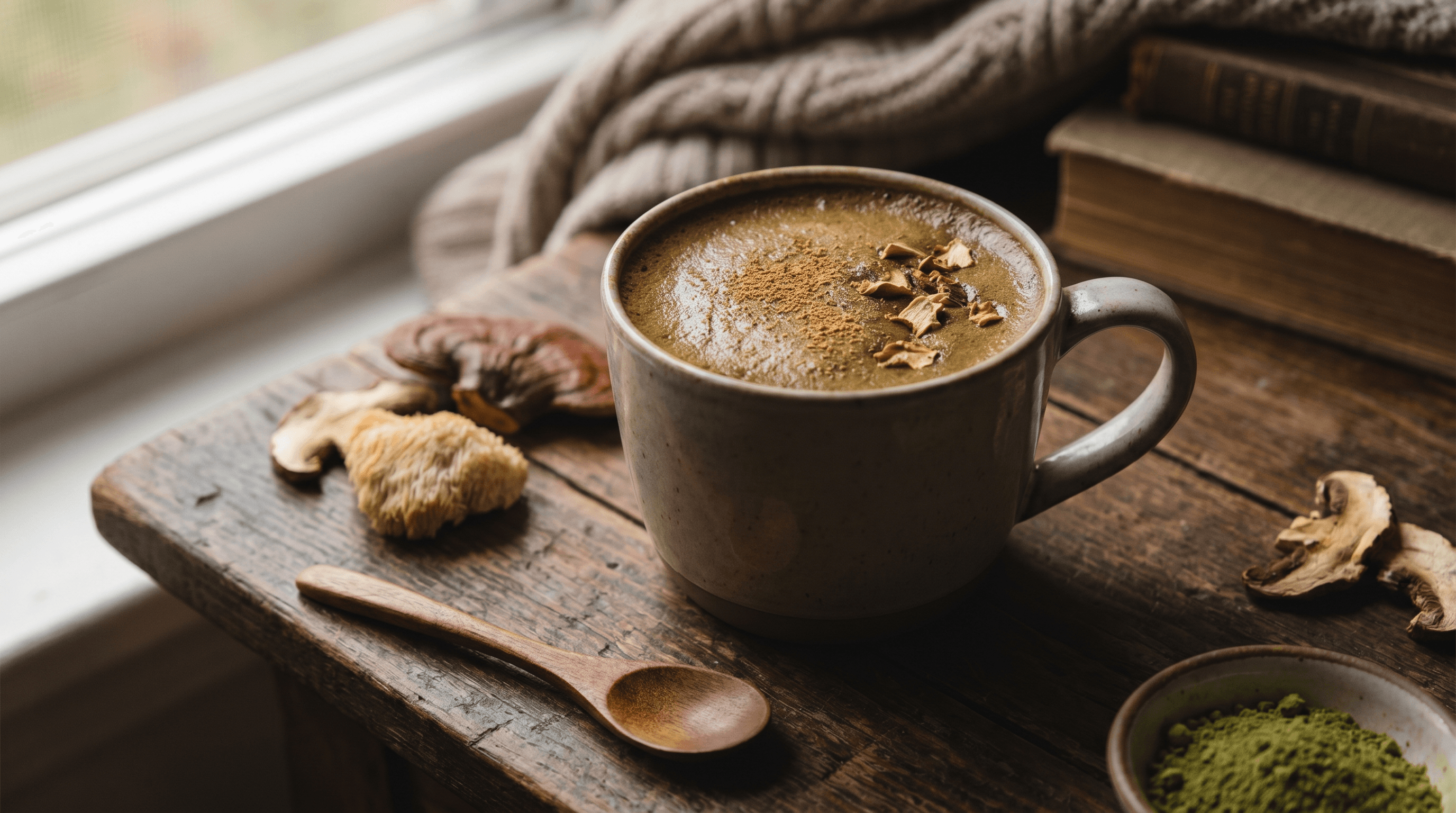
What Is Mushroom Matcha?
Mushroom matcha is exactly what it sounds like: ceremonial-grade matcha blended with powdered adaptogenic mushroom extracts. Not the mushrooms you put on pizza — we're talking functional fungi like lion's mane, reishi, chaga, and cordyceps that have been used in traditional Chinese and Japanese medicine for centuries.
The concept isn't new. Japanese and Chinese herbalists have been pairing tea with medicinal mushrooms for over a thousand years. What's new is the modern wellness market catching on — and a wave of products making these blends accessible to anyone with a whisk and a mug.
The appeal is straightforward: matcha already delivers calm, sustained energy thanks to its unique combination of caffeine and L-theanine. Adaptogenic mushrooms add another layer — cognitive support, stress resilience, immune function — depending on which species you use. Together, they create something that neither ingredient achieves alone.
Why Matcha and Mushrooms Work So Well Together
This isn't just a trendy flavor mashup. There's a real biochemical logic to the pairing.
L-Theanine Meets Adaptogens
Matcha is the richest natural source of L-theanine, an amino acid that promotes alpha brain wave activity — the state associated with calm focus. Adaptogenic mushrooms, by definition, help your body resist and adapt to stress by modulating cortisol and supporting homeostasis. When you combine L-theanine's calming effect with adaptogens' stress-buffering capacity, you get a drink that supports sustained mental performance without the wired feeling.
Complementary Antioxidant Profiles
Matcha is loaded with catechins — particularly EGCG, one of the most studied antioxidants in food science. Mushrooms like chaga contain their own antioxidant compounds, including melanin and superoxide dismutase (SOD). The two antioxidant profiles don't overlap much, which means combining them gives you broader coverage against oxidative stress than either one alone.
Absorption and Bioavailability
The fats commonly added to a mushroom matcha latte (milk, coconut oil, ghee) actually help with absorption. Many of the beneficial compounds in adaptogenic mushrooms are fat-soluble, so blending them into a creamy matcha latte isn't just tastier — it's functionally smarter.
The Best Mushrooms to Pair With Matcha
Not all functional mushrooms do the same thing. Here's a breakdown of the four most common species you'll see in mushroom matcha blends, and what each one brings to the cup.
Lion's Mane — For Focus and Clarity
What it does: Lion's mane (Hericium erinaceus) is the star of the nootropic mushroom world. Research suggests it stimulates nerve growth factor (NGF) production, which supports neuroplasticity — your brain's ability to form new connections and adapt. Studies have shown improvements in mild cognitive impairment and everyday focus.
Why it pairs with matcha: Matcha's L-theanine already promotes alpha brain waves and calm focus. Adding lion's mane doubles down on the cognitive angle. If you're drinking matcha to be sharper at work, lion's mane matcha is the logical upgrade.
Typical dose: 500mg–1g of extract per serving.
Reishi — For Calm and Recovery
What it does: Reishi (Ganoderma lucidum), known as the "mushroom of immortality" in traditional Chinese medicine, is primarily used for stress reduction, sleep support, and immune modulation. It contains triterpenes and beta-glucans that help regulate the immune system and calm the nervous system.
Why it pairs with matcha: If your goal is winding down or managing stress without giving up the gentle lift of matcha, reishi is the mushroom to add. It amplifies matcha's calming L-theanine effect while adding immune support. Some people prefer reishi matcha as an afternoon or evening drink.
Typical dose: 500mg–1.5g of extract per serving.
Chaga — For Immunity and Antioxidants
What it does: Chaga (Inonotus obliquus) grows on birch trees in cold climates and has one of the highest ORAC (antioxidant capacity) scores of any food tested. It's rich in beta-glucans, melanin, and betulinic acid — compounds that support immune function and fight oxidative stress.
Why it pairs with matcha: Matcha is already an antioxidant powerhouse. Adding chaga creates a genuinely stacked antioxidant profile. This is the pairing for people who are health-first and want to maximize the protective benefits of their daily drink.
Typical dose: 500mg–1g of extract per serving.
Cordyceps — For Energy and Endurance
What it does: Cordyceps (Cordyceps militaris, in modern supplements) has been studied for its effects on ATP production — the energy currency of your cells. Research has shown improvements in oxygen utilization during exercise and overall physical endurance.
Why it pairs with matcha: If you're using matcha as a pre-workout or pre-run drink, cordyceps turns it into a genuine performance beverage. The caffeine from matcha provides the alertness, and cordyceps supports the cellular energy production underneath it.
Typical dose: 500mg–1g of extract per serving.
How to Make Mushroom Matcha at Home
You don't need a pre-made blend. In fact, making your own gives you more control over quality and dosage.
Basic Mushroom Matcha (Hot)
- Sift 1–2g (about 1 teaspoon) of ceremonial-grade matcha into a bowl or mug
- Add 0.5–1g of your chosen mushroom extract powder (lion's mane, reishi, chaga, or cordyceps)
- Pour in 2oz of hot water (175°F / 80°C — not boiling)
- Whisk vigorously with a bamboo chasen or milk frother until smooth and frothy
- Top with 4–6oz more hot water, or move to the latte version below
Mushroom Matcha Latte
- Follow steps 1–4 above
- Heat 6oz of your preferred milk (oat, coconut, and macadamia work particularly well) and froth it
- Pour the frothed milk over the matcha-mushroom base
- Optional: add ½ teaspoon of honey, maple syrup, or coconut sugar
Pro tip: The fat in full-fat coconut milk or a dash of MCT oil improves absorption of the mushrooms' fat-soluble compounds. It also makes the latte creamier and mellows out any earthiness from the extract.
What Does Mushroom Matcha Taste Like?
This is the question everyone asks first, and the answer is more reassuring than you'd think.
Quality adaptogenic mushroom extracts — the dual-extracted kind you should be buying — have a mild, earthy, slightly nutty flavor. They don't taste like culinary mushrooms. When blended with matcha, the mushroom flavor integrates into matcha's existing earthy-umami profile. Most people describe the result as slightly richer, a touch more grounding, and maybe a shade more "woody" than plain matcha.
If you're using lion's mane, the taste difference is almost undetectable. Reishi is the most bitter of the common species and can add a slightly bitter edge if over-dosed — stay at or below 1g and you'll be fine. Chaga is mellow and slightly vanilla-like. Cordyceps is neutral to slightly sweet.
Bottom line: if you already enjoy matcha, mushroom matcha won't be a taste stretch at all.
The RYZE and MudWtr Factor
You've probably seen brands like RYZE and MudWtr all over your social feeds. They've done something genuinely impressive: taken the concept of functional mushroom drinks and turned it into a mainstream conversation. A few years ago, you'd get blank stares mentioning lion's mane at brunch. Now your coworker is ordering a mushroom latte at the corner café.
That said, most of these popular blends use instant coffee or chicory as their base, not matcha. There's nothing wrong with that — different strokes. But if you're specifically drawn to matcha for its L-theanine, antioxidant density, and smoother energy curve, layering mushrooms onto a matcha base gives you a different (and arguably more synergistic) stack.
The other thing to watch with pre-made blends is dosage transparency. Look for products that list exactly how much of each mushroom extract is included — not just a "proprietary blend" total. If a label says "500mg mushroom blend" but contains four species, you're getting 125mg of each at best. That's likely below the threshold where any of them do much.
Quality Red Flags: What to Avoid
The mushroom supplement market has a quality problem. Here's what to look out for:
- Mycelium on grain: Some products are made from mycelium (the root structure) grown on grain, not the actual mushroom fruiting body. The result is a product that's largely starch filler. Look for "fruiting body" on the label.
- No extraction method listed: Raw mushroom powder isn't well-absorbed by humans — we can't break down chitin cell walls efficiently. The extract should be dual-extracted (hot water + alcohol) to make the beneficial compounds bioavailable.
- Proprietary blends with hidden doses: As mentioned above, "mushroom blend 500mg" tells you nothing about individual dosing. Each species should be listed with its own amount.
- No third-party testing: Heavy metals (particularly arsenic and lead) are a real concern with mushroom supplements. Look for a Certificate of Analysis (COA) or third-party testing from labs like Eurofins, NSF, or USP.
- Added fillers: Maltodextrin, silicon dioxide, and other flow agents are common in cheaper powders. A quality extract should have a short ingredient list.
Dosage Guidelines
More isn't better with adaptogens. Here's a sensible daily framework:
- Matcha: 1–2 servings per day (2–4g of powder total)
- Lion's mane: 500mg–1g per day
- Reishi: 500mg–1.5g per day (higher end for sleep support, lower for daytime use)
- Chaga: 500mg–1g per day
- Cordyceps: 500mg–1g per day
If you're stacking multiple mushrooms, keep the total mushroom extract under 2–3g per day. And start with one species first — give it a week or two before adding another. That way, you can actually tell what's doing what.
Who Is Mushroom Matcha For?
This isn't a niche biohacker drink anymore. Mushroom matcha makes sense for:
- Knowledge workers who want sustained focus without the jitter-crash cycle of coffee
- Stress-prone professionals who want calming energy, not just stimulation
- Fitness-minded people looking for a cleaner pre-workout alternative to synthetic pre-workout powders
- Anyone already drinking matcha who wants to add a functional layer without changing their routine
- Wellness-curious beginners who've heard about adaptogens and want a simple, daily entry point
If you're already drinking matcha daily, mushroom matcha isn't a radical change — it's an upgrade to something you're already doing.
The Bottom Line
Mushroom matcha takes two of the most well-studied functional ingredients — matcha and adaptogenic mushrooms — and combines them into a single daily drink. The science behind both ingredients is solid independently, and their mechanisms complement each other: L-theanine for calm focus, adaptogens for stress resilience, stacked antioxidant profiles, and caffeine for sustained energy.
The key is quality. Start with real ceremonial-grade matcha as your base — that's non-negotiable. Then add a high-quality, dual-extracted mushroom powder from a transparent brand. Skip the proprietary blends with mystery dosing, avoid mycelium-on-grain products, and start with one mushroom species at a time.
The trend is real. The science is catching up. And your morning matcha ritual is about to get a lot more interesting.
Frequently Asked Questions
Does mushroom matcha taste like mushrooms?
Not really. Adaptogenic mushroom extracts — especially lion's mane and reishi — have a mild, earthy flavor that blends seamlessly with matcha's natural umami. Most people describe mushroom matcha as slightly richer and more grounding than regular matcha, not mushroomy.
How much mushroom extract should I add to matcha?
A standard dose is 0.5–1 gram (about ½ teaspoon) of mushroom extract powder per serving. Start on the lower end and adjust based on how you feel. If you're using a blend with multiple mushrooms, the total should still stay in the 0.5–1.5g range.
Can I drink mushroom matcha every day?
Yes. Both matcha and adaptogenic mushrooms like lion's mane, reishi, and chaga have long histories of daily use. Adaptogens actually work best with consistent use over weeks, as the effects are cumulative. Just stick to recommended dosages and choose products with third-party testing.
Related Articles
Ready to Try AURI Matcha?
Premium ceremonial-grade matcha from Uji, Kyoto.
Shop Now