
How Is Matcha Made? The Complete Journey from Seed to Cup
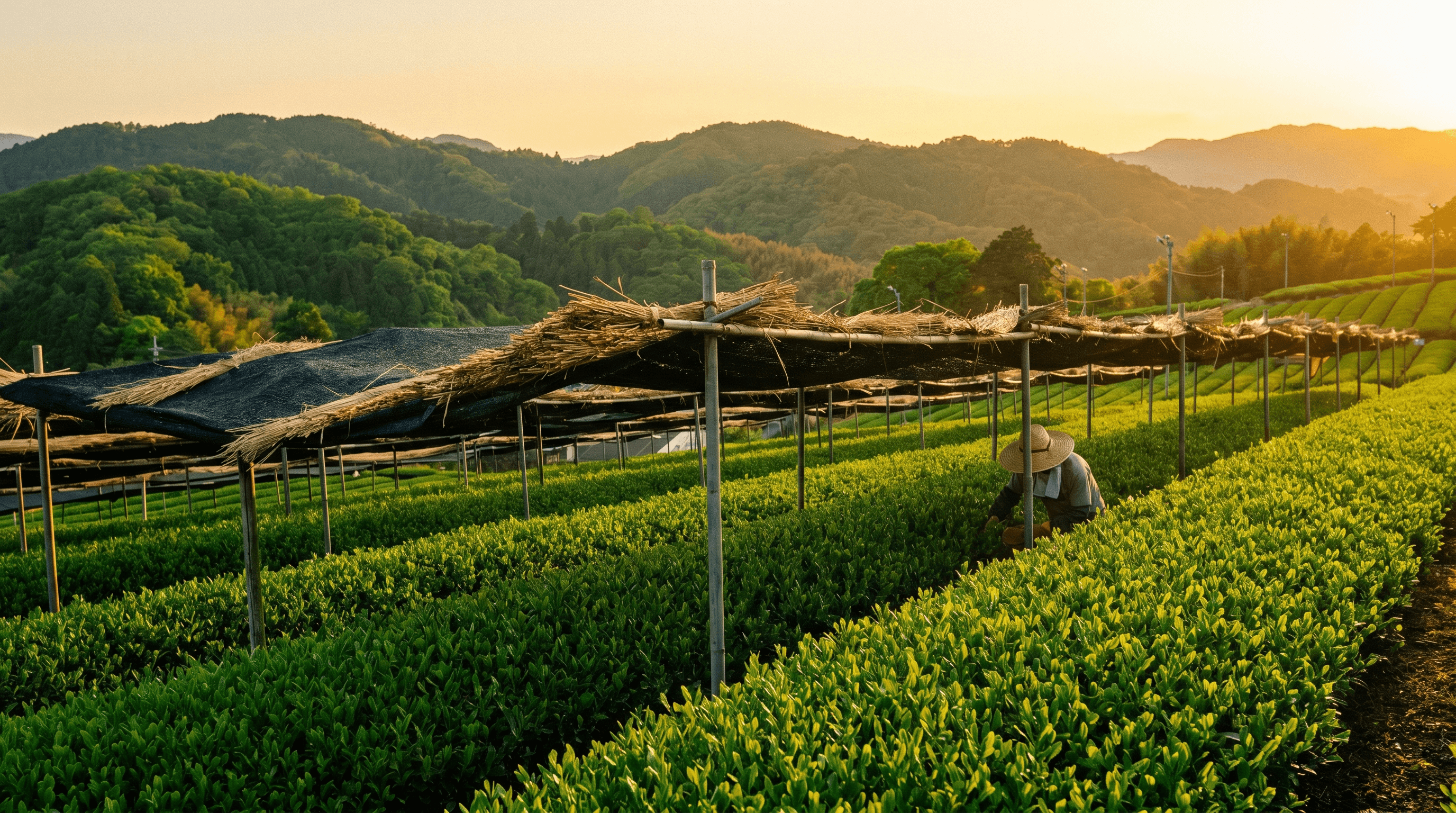
It Starts in the Shade
Somewhere in the rolling hills south of Kyoto — in Uji, Wazuka, or the misty interior of Kagoshima — a tea farmer is standing at the edge of a field draped in black. Not mourning. Growing.
The dark curtains stretched above the tea rows aren't decorative. They're the single most important decision in matcha production. About 20 to 30 days before the spring harvest, farmers cover their Camellia sinensis plants with shade structures called tana, blocking 85–90% of sunlight. Traditionally this was done with straw (honzu shading); today most farms use woven black vinyl, though the elite estates in Uji still use the old method for their top grades.
This forced darkness changes the plant's chemistry at a cellular level. Starved of light, the leaves overproduce chlorophyll — turning an almost unnaturally vivid green — and flood with L-theanine, the amino acid responsible for matcha's signature umami sweetness and the calm, focused energy drinkers describe. In sunlight, L-theanine converts into catechins (which taste bitter). In shade, it stays intact. That's the tradeoff farmers are engineering: more sweetness, more depth, more of everything that makes matcha taste like matcha.
Skip this step — or cut it short at ten days instead of twenty — and you get a tea that's yellow-green, thin, and astringent. Many mass-market "matcha" brands do exactly that.
The First Harvest: Picking at Peak
In late April or early May, the first flush arrives. The Japanese call it ichiban-cha — first tea — and it's the most prized harvest of the year. After an entire winter of rest, the tea plants push out tender new shoots loaded with nutrients and amino acids. These young, top-of-the-plant leaves are what become the finest matcha.
For premium grades, the leaves are still hand-picked (tezumi). Harvesters select only the newest growth — typically the top two or three leaves of each stem. Machine harvesting is faster and cheaper, but it's less selective; it grabs older, tougher leaves along with the young ones, diluting quality.
There are second harvests (nibancha, June) and even third harvests later in summer, but each successive picking produces leaves with less L-theanine, more bitterness, and less of the complexity that defines great matcha. When you see matcha priced suspiciously low, it's almost always made from later harvests — or from leaves that were never properly shaded at all.
Steaming: The 20-Second Decision
Here's where matcha diverges from every other tea in the world. Within hours of being picked — sometimes within minutes — the fresh leaves are hit with a blast of steam.
This brief steaming (typically 15–20 seconds) halts oxidation instantly. It's the reason matcha stays green. Without it, enzymes in the leaf would begin breaking down chlorophyll and converting the tea toward what would eventually become oolong or black tea. The Japanese call this step sassei, and it's been central to their tea-making tradition for centuries — Chinese green teas use pan-firing instead, which produces a completely different flavor profile.
The steaming has to be precise. Too short and oxidation isn't fully stopped; the matcha will taste flat and brown quickly. Too long and the leaves become waterlogged and develop an unpleasant vegetal, almost seaweed-like taste. Master processors adjust steam duration based on the moisture content and thickness of each day's harvest.
Drying Into Aracha
After steaming, the leaves pass through a series of heated air dryers. The goal is to bring moisture content down without cooking the tea. The leaves tumble through long drying chambers, emerging brittle and crinkled — like dark green confetti.
At this stage, the product is called aracha: crude, unrefined tea. It still contains stems, veins, and leaf fragments of varying sizes. Aracha is the raw material, but it's nowhere near ready to become matcha. Think of it as the rough stone before a sculptor begins carving.
Good aracha smells intensely fresh — bright, grassy, with a hint of sweetness. If it smells musty, stale, or overly roasted, something went wrong upstream, and no amount of processing will fix it.
Refining Into Tencha: The Step Most People Have Never Heard Of
This is where matcha's path becomes unique. The aracha is fed through a series of machines that do one deceptively simple thing: separate the pure leaf flesh from everything else.
Stems are removed. Veins — the fibrous internal structure of each leaf — are stripped out. Dust and broken fragments are sifted away. What remains is a collection of flat, pure leaf pieces about the size of a fingernail, jade-green and papery thin. This is tencha.
Tencha is the soul of matcha. Without this refinement step, you can't make real matcha — you can only make green tea powder. And that distinction matters enormously. Generic green tea powder (ground sencha, for example) includes stems and veins that add bitterness, fibrous texture, and a dull color. Tencha contains only the parts of the leaf where the good stuff — chlorophyll, L-theanine, amino acids — is concentrated.
At the tencha stage, tea masters also do their blending. Different cultivars (Okumidori, Samidori, Gokou, and others) have different flavor characteristics. A master blender might combine tencha from several cultivars grown in different parts of a farm to achieve a specific taste profile — much like a winemaker blending grape varieties. This blending is considered an art, and the recipes are closely guarded secrets passed down within tea families.
Stone Grinding: 40 Grams Per Hour
Now the defining step. Tencha leaves are fed into granite stone mills — ishi-usu — and ground into the impossibly fine powder we know as matcha.
The numbers tell the story of why this step is so expensive. A single granite mill, turning at a carefully controlled speed, produces approximately 40 grams of matcha per hour. That's one small tin. One mill, one hour, one tin. A farm producing enough matcha for commercial sale might run dozens of mills around the clock during production season.
The slow speed is non-negotiable. Friction generates heat, and heat is the enemy of everything good in matcha. It degrades chlorophyll (turning the powder from vivid green to dull olive), destroys volatile aromatic compounds, and breaks down L-theanine. The granite mills stay cool because they turn so slowly — about 40–60 revolutions per minute. The particle size they produce is extraordinary: 5–10 microns, finer than talcum powder, small enough that the matcha feels creamy on your tongue rather than gritty.
This is also where you can immediately spot the difference between premium and mass-market matcha. Many large-scale producers have switched to jet milling (also called air-classification milling), which uses high-pressure air streams to pulverize the leaves in seconds rather than hours. It's dramatically cheaper and faster — but the process generates heat, static electricity, and larger, less uniform particles. Jet-milled matcha tends to look duller, clump more, taste more bitter, and lose its freshness faster. If your matcha feels sandy on your tongue or looks more army-green than emerald, it was probably jet-milled.
Packaging and Storage: Protecting What Took Months to Build
Matcha's worst enemies are oxygen, light, heat, and moisture. Every one of them accelerates degradation. Once ground, the clock starts ticking — the massive surface area of those tiny particles means matcha oxidizes far faster than whole-leaf tea.
Top producers package matcha in sealed, opaque tins or nitrogen-flushed pouches immediately after grinding. Some estates in Japan grind to order, keeping their tencha in cold storage and only milling when a batch is needed. This is the gold standard for freshness.
Once you open a tin at home, the same rules apply. Keep it sealed, in the fridge if possible, away from light, and use it within four to six weeks for peak flavor. Matcha that's been sitting open on a shelf for months is technically still safe to drink — but the flavor, color, and nutritional profile will be a shadow of what it was.
What Shortcuts Look Like (And How to Spot Them)
Not every matcha goes through this seven-step journey. The global demand for matcha has far outpaced the supply of traditionally produced powder, creating a market full of shortcuts. Here's what to watch for:
- No shade growing or reduced shading: The matcha will be yellowish-green rather than vibrant emerald, and will taste bitter and astringent rather than smooth and sweet.
- Later harvests used as "ceremonial": Second and third flush leaves lack the L-theanine concentration of first harvest. The flavor is flat and one-dimensional.
- Skipping the tencha step: Grinding whole sencha leaves (stems, veins, and all) produces "green tea powder," not matcha. It's gritty, bitter, and dull-colored.
- Jet milling instead of stone grinding: Faster and cheaper but produces coarser particles, more heat damage, and inferior taste. The powder often feels sandy rather than silky.
- Chinese or non-Japanese origin labeled vaguely: China produces large volumes of powdered green tea, some of it excellent — but much of it is not shade-grown or tencha-processed. If the origin isn't clearly stated, ask why.
- Added ingredients: Some "matcha" products contain sugar, milk powder, artificial colors, or fillers. Real matcha has one ingredient: matcha.
How to Tell If Your Matcha Was Made Right
You don't need a lab. Your senses are enough:
- Color: Vivid, bright green — closer to jade than to olive or khaki. If it's brownish-green, it wasn't shade-grown long enough or it's been oxidized.
- Smell: Fresh, sweet, slightly grassy with an underlying richness. Stale matcha smells like hay.
- Texture: Silky smooth between your fingers, almost like eyeshadow. Stone-ground matcha at 5–10 microns feels completely different from the 15–20 micron particles of jet-milled powder.
- Taste: Umami-forward, naturally sweet, with a clean finish. Minimal bitterness. If the first thing you taste is astringency, something in the production was cut short.
- Foam: When whisked with a chasen, properly made matcha produces a thick, stable layer of tiny bubbles. Coarsely ground matcha produces large, unstable bubbles that pop quickly.
Why All of This Matters in Your Cup
When you whisk a bowl of matcha, you're drinking the result of a process that began months before that tin reached your hands. Every step — the weeks of shading, the precision of the steam, the patience of the stone mill — shows up in the flavor, the color, the texture, and the way the caffeine and L-theanine work together in your body.
This is why AURI Ceremonial Matcha comes from first-harvest, shade-grown tencha that's stone-ground on granite mills in Japan. Not because tradition is romantic (though it is), but because the science confirms what tea masters have known for centuries: there is no shortcut that doesn't cost you something in the cup.
If you're ready to experience the difference real production makes, our Matcha Starter Kit pairs our ceremonial-grade powder with the traditional tools — chasen, chashaku, and bowl — so you can prepare it the way it was meant to be enjoyed.
And if you want to understand more about the tea itself before diving in, start with our guide: What Is Matcha? The Complete Guide.
Frequently Asked Questions
How long does it take to make matcha from start to finish?
The full process takes months. Tea plants are shade-covered for 20–30 days before harvest, and after picking, the leaves go through steaming, drying, sorting, and stone grinding. A single granite mill produces only about 40 grams of matcha per hour — so from field to sealed tin, a batch can take weeks to complete.
What is tencha and why does it matter?
Tencha is the refined tea leaf material created after steaming, drying, and removing all stems and veins from shade-grown leaves. Only tencha can be stone-ground into real matcha. Generic 'green tea powder' skips this step and grinds whole sencha leaves — stems, veins, and all — producing an inferior product.
What is the difference between stone-ground and jet-milled matcha?
Traditional stone grinding uses granite mills that turn slowly, keeping temperatures low and preserving flavor, color, and nutrients. Jet milling uses high-pressure air to pulverize leaves quickly but generates heat and static that degrade the tea. Stone-ground matcha is silkier, more vibrant green, and tastes smoother. Jet-milled matcha often looks dull and tastes more bitter.
Why is shade growing important for matcha?
Blocking 85–90% of sunlight for the final 20–30 days before harvest forces the tea plant to overproduce chlorophyll (giving matcha its vivid green color) and dramatically increases L-theanine levels (the amino acid responsible for matcha's smooth, umami-rich flavor and calm-focus effect). Without proper shading, the tea is just regular green tea.
Related Articles
Ready to Try AURI Matcha?
Premium ceremonial-grade matcha from Uji, Kyoto.
Shop Now