
Iced Matcha Latte: The Perfect Recipe + Variations
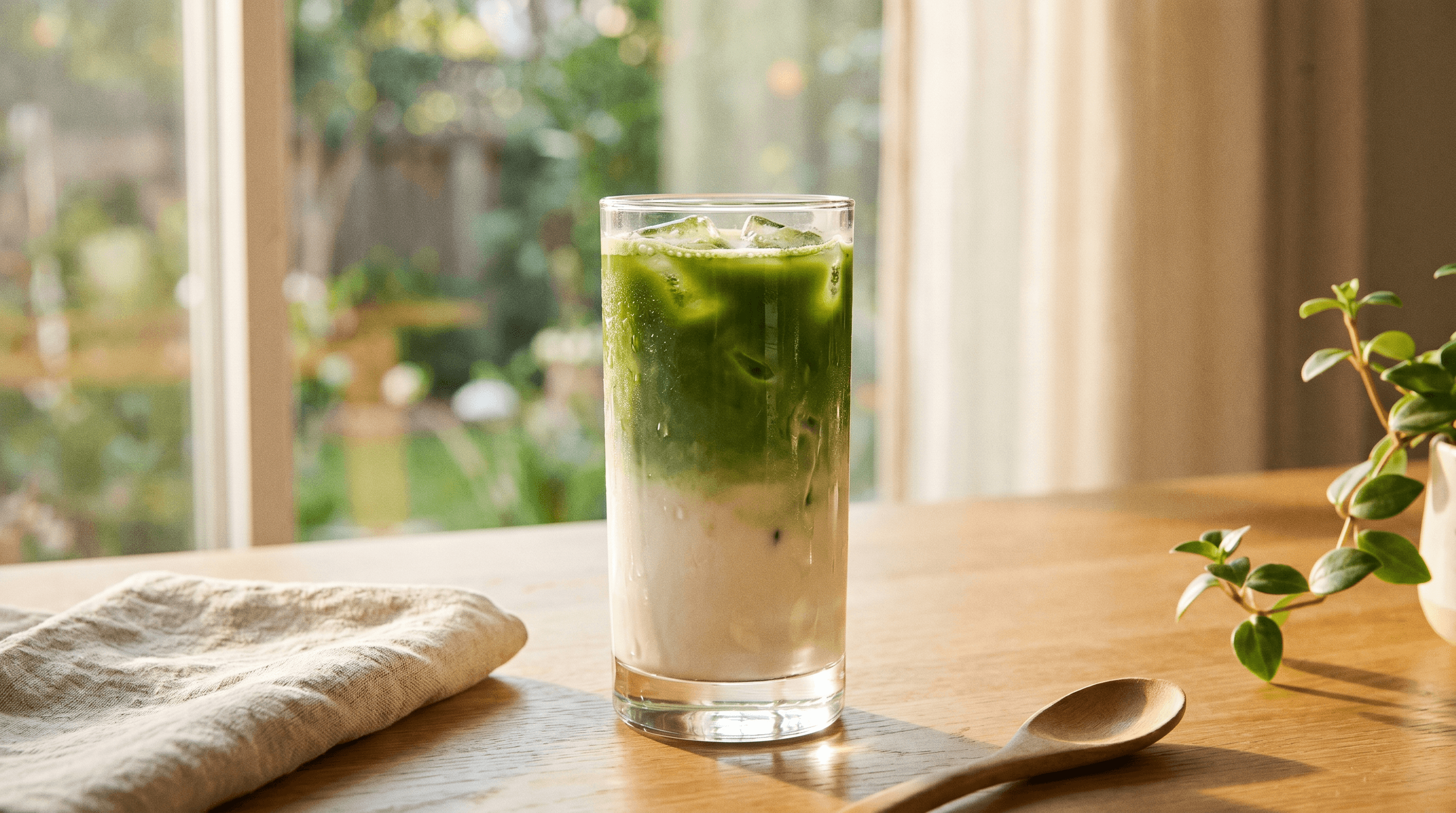
The Classic Iced Matcha Latte Recipe
An iced matcha latte is one of the simplest and most satisfying drinks you can make at home. It takes about three minutes, costs a fraction of what a café charges, and — when made with quality matcha — tastes significantly better than most store-bought versions.
Here's the recipe, step by step.
What You Need
- Matcha powder: 2g (about 1 teaspoon). AURI Barista Matcha is our pick for iced lattes — it's designed to punch through cold milk.
- Hot water: 2 tablespoons (30ml), heated to about 175°F (80°C)
- Cold milk: 8oz (240ml) of your choice
- Ice: Enough to fill a 12–16oz glass
- Sweetener (optional): Honey, maple syrup, or simple syrup
Step 1: Sift the Matcha
Push 2g of matcha through a fine-mesh sieve into a small bowl. This breaks up clumps before they become a problem. Matcha is naturally prone to clumping due to its ultra-fine particle size and static — sifting takes 10 seconds and is the single biggest difference between a smooth drink and a lumpy one.
Step 2: Whisk with Hot Water
Add 2 tablespoons of hot water (175°F, not boiling) to the sifted matcha. Whisk vigorously with a bamboo chasen or milk frother in a W-shaped motion for 15–20 seconds until the matcha is fully dissolved and slightly frothy. This concentrated matcha shot is the foundation of your latte.
This step is non-negotiable, even for an iced drink. Matcha does not dissolve in cold liquid. If you skip the hot water step, you'll be drinking green-speckled milk with clumps stuck to the bottom of the glass.
Step 3: Fill a Glass with Ice
Fill a tall 12–16oz glass to the top with ice cubes. Use large cubes if you have them — they melt more slowly and keep your drink from getting watery in the first few minutes.
Step 4: Pour in Cold Milk
Pour 8oz of cold milk over the ice. Leave a little room at the top for the matcha shot.
Step 5: Pour the Matcha Over Top
Slowly pour the whisked matcha concentrate over the milk. Watch it cascade through in green ribbons — that layered look is half the appeal of an iced matcha latte. If you want it fully mixed, give it a stir with a long spoon or straw.
Step 6: Sweeten If You Want
Taste it first. Good matcha with oat milk or coconut milk is naturally sweet enough for most people. If you do want a touch of sweetness, add a drizzle of honey or simple syrup.
Why Barista-Grade Matcha Works Best for Iced Drinks
Cold temperatures mute flavors. That's just how your taste buds work — they're less sensitive when drinks are ice-cold compared to warm. This is why a matcha that tastes perfectly balanced as a hot drink can taste flat and weak over ice.
Barista-grade matcha solves this problem. It's formulated with a bolder, more robust flavor profile that stays present through cold milk and ice. AURI Barista Matcha is specifically crafted for this — it delivers a clean, strong matcha character even in a fully iced preparation.
Ceremonial matcha can absolutely be used for iced lattes too, and some people prefer its more delicate, nuanced character. But if you want that punchy matcha flavor to come through clearly in every sip, barista grade is the move.
Iced Matcha Latte Variations
Once you've nailed the classic version, these variations keep things interesting.
Vanilla Iced Matcha Latte
Add 1/4 teaspoon of pure vanilla extract to the milk before pouring. This is the single most popular variation for a reason — vanilla rounds out matcha's vegetal notes and adds a subtle warmth. Skip the vanilla syrup from the store (it's mostly sugar) and use real extract instead.
Oat Milk Iced Matcha Latte
Oat milk is arguably the best milk for iced matcha. Its natural sweetness complements matcha's umami character, and it has a creamy mouthfeel that holds up well over ice. Barista-specific oat milks (like Oatly Barista Edition) are slightly thicker and work even better. This combination is what most specialty cafés serve as their default iced matcha.
Coconut Iced Matcha Latte
Use full-fat canned coconut milk (diluted with a splash of water if it's too thick) for a rich, tropical take. Coconut's natural sweetness means you rarely need added sweetener. For an extra-indulgent version, top it with a float of coconut cream.
Lavender Iced Matcha Latte
Add 1–2 drops of food-grade lavender extract to the milk (start with one drop — lavender is potent). The floral notes pair beautifully with matcha's earthiness. You can also infuse dried culinary lavender into simple syrup for a more subtle approach.
Honey Ginger Iced Matcha Latte
Dissolve 1 teaspoon of honey and a small pinch of ground ginger into the hot matcha shot before pouring over ice and milk. The ginger adds a warm bite that contrasts nicely with the cold drink.
Starbucks Iced Matcha Latte vs. Real Matcha
Let's be direct: the Starbucks iced matcha latte and a homemade version with quality matcha are very different drinks.
Starbucks uses a pre-mixed matcha powder that lists sugar as the first ingredient. Their "matcha" blend is roughly half sugar, half matcha powder — meaning every scoop delivers as much sugar as it does actual tea. The result is sweet, green, and recognizable, but it masks what matcha actually tastes like.
A homemade iced matcha latte with pure matcha (ingredient list: matcha) gives you the actual flavor of the tea — umami, vegetal, naturally sweet — without a hidden sugar payload. You control the sweetness. You get the full nutritional benefits. And it costs about $1.50 per drink instead of $6.
This isn't to say Starbucks is doing something wrong — they're making a product that appeals to a mass audience. But if you've only ever had Starbucks matcha, you genuinely have not experienced what matcha tastes like. It's worth trying the real thing at least once. For more on matcha's actual flavor profile, see our guide on what matcha tastes like.
Tips for a Clump-Free Iced Matcha Latte
Clumps are the number-one complaint people have when making matcha at home, and cold drinks make the problem worse. Here's how to avoid them entirely:
- Always sift. Every time. Push the matcha through a fine-mesh sieve before whisking. This is the most important step.
- Always use hot water first. A small amount (2 tablespoons) of 175°F water is all you need. Matcha physically cannot dissolve in cold liquid.
- Whisk aggressively. A bamboo chasen works best, but an electric milk frother or even a small regular whisk will do. You need about 15–20 seconds of vigorous motion.
- Don't let the concentrate sit. Pour it over the iced milk soon after whisking. Matcha begins to settle and clump again if left sitting too long.
- If all else fails, blend it. Toss the matcha, hot water, cold milk, ice, and sweetener into a blender for 10 seconds. A blended iced matcha is always smooth.
If you don't have a whisk yet, our Matcha Starter Kit includes a bamboo chasen along with ceremonial-grade matcha — everything you need to get started.
Nutrition Info
Here's roughly what you're looking at for a standard homemade iced matcha latte (2g matcha, 8oz milk, no sweetener):
- With oat milk: ~120 calories, 5g fat, 16g carbs, 3g protein
- With whole dairy milk: ~150 calories, 8g fat, 12g carbs, 8g protein
- With almond milk (unsweetened): ~40 calories, 3g fat, 2g carbs, 1g protein
- With coconut milk (canned, diluted): ~100 calories, 10g fat, 2g carbs, 1g protein
On top of that, you're getting the matcha itself: roughly 60–70mg of caffeine modulated by L-theanine for sustained energy without jitters, plus a concentrated dose of antioxidants (EGCG), chlorophyll, and amino acids. For a full breakdown of matcha's caffeine content, check out our guide: Does Matcha Have Caffeine?
Make It Your Daily Drink
An iced matcha latte is one of the best daily drinks you can build a habit around — clean energy, real nutrition, and it genuinely tastes good once you're using quality matcha. The whole thing takes three minutes and costs under $2.
Start with AURI Barista Matcha for the boldest iced latte flavor, or Ceremonial Matcha if you want something more refined. Either way, once you've made a real iced matcha latte at home, the café versions start looking overpriced and over-sweetened.
Frequently Asked Questions
Can you mix matcha directly into cold milk?
No. Matcha powder won't dissolve in cold liquid and you'll end up with clumps floating on top. Always whisk the matcha with a small amount of hot water first to create a smooth concentrate, then pour it over cold milk and ice.
How many calories are in an iced matcha latte?
A homemade iced matcha latte with oat milk and no sweetener is roughly 90-130 calories. With whole dairy milk, it's about 120-150 calories. Starbucks versions can reach 200-300+ calories due to added sugar and syrup.
What matcha grade should I use for an iced latte?
A barista-grade matcha is ideal for iced lattes because it has a bold, concentrated flavor that stays vibrant through cold milk and ice. Ceremonial grade works too if you prefer a more delicate, nuanced drink.
How do I keep my iced matcha latte from getting watery?
Use large ice cubes — they melt slower than small ones. You can also freeze matcha concentrate into ice cubes so your drink gets stronger as they melt instead of diluted.
Related Articles
Ready to Try AURI Matcha?
Premium ceremonial-grade matcha from Uji, Kyoto.
Shop Now