
Matcha vs Green Tea: What's the Difference?
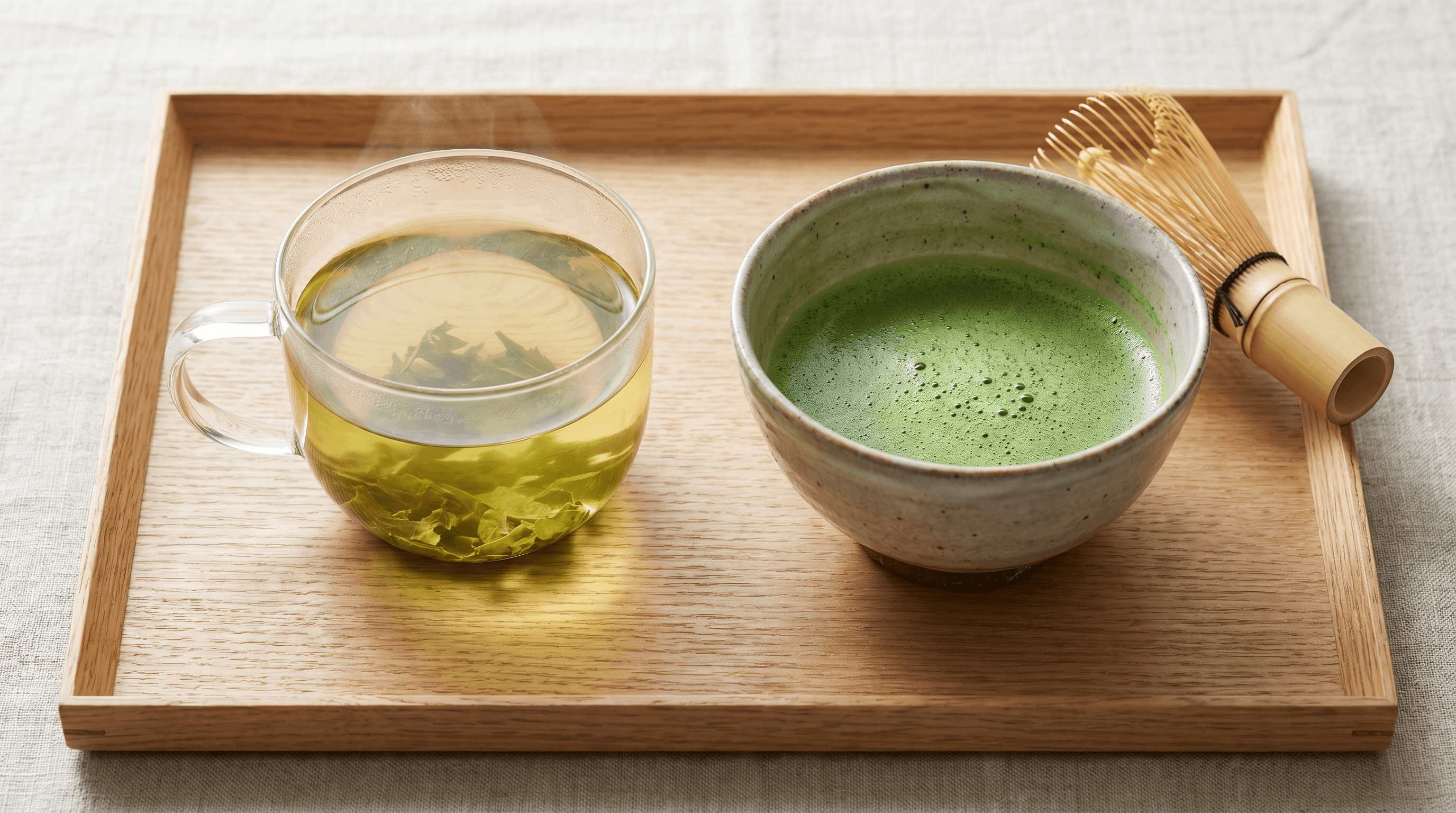
Same Plant, Very Different Teas
Here's the first thing to know: matcha is green tea. Both come from the same plant — Camellia sinensis — the same species that produces black tea, oolong, and white tea. The difference lies entirely in how the leaves are grown, processed, and consumed.
That difference might sound minor, but it changes everything — from the nutritional profile to the taste to how much you'll pay per cup. This guide breaks down every meaningful distinction so you can decide which one belongs in your daily routine (or whether both do).
How They're Made: Processing Differences
Green Tea
Regular green tea — sencha, gyokuro, dragonwell, gunpowder — follows a relatively straightforward production process:
- Harvest: Leaves are picked from tea plants grown in full sunlight (with the exception of gyokuro, which is also shade-grown)
- Heat: Leaves are quickly steamed (Japanese method) or pan-fired (Chinese method) to halt oxidation
- Roll and dry: Leaves are rolled into their final shape and dried for storage
- Brew and discard: You steep the leaves in hot water, then throw them away
The key point: you're drinking an infusion of the leaf, not the leaf itself. Water-soluble compounds transfer into your cup, but the majority of the leaf's nutrients stay behind.
Matcha
Matcha production is significantly more involved:
- Shade-growing: Tea plants are covered for 20–30 days before harvest, blocking ~90% of sunlight. This forces the plant to overproduce chlorophyll and L-theanine.
- Harvest: Only the youngest, most tender leaves are picked — by hand for the best grades
- Steam and dry: Leaves are steamed to prevent oxidation, then air-dried
- De-stem and de-vein: All stems and veins are removed, leaving pure leaf flesh called "tencha"
- Stone-grind: Tencha is ground into ultra-fine powder using granite mills at about 40g per hour
- Consume whole: You whisk the powder into water and drink everything — the entire leaf
This is the fundamental distinction: with matcha, you consume 100% of the leaf. With green tea, you consume a fraction of what the leaf contains. For a deeper look at matcha's production process, see our complete guide to matcha.
Nutritional Comparison
Because you're consuming the whole leaf with matcha versus an infusion with green tea, the nutritional gap is substantial. Here's how they compare per standard serving:
| Nutrient | Matcha (2g serving) | Green Tea (8oz steeped) | Difference |
|---|---|---|---|
| EGCG (antioxidant) | ~134mg | ~25–50mg | Matcha has up to 3–5x more |
| L-Theanine | ~40–60mg | ~8–20mg | Matcha has 3–5x more |
| Caffeine | ~60–70mg | ~25–50mg | Matcha has ~1.5–2x more |
| Calories | ~5 kcal | ~2 kcal | Negligible for both |
| Catechins (total) | ~250–300mg | ~50–100mg | Matcha has up to 137x more* |
| Chlorophyll | High (shade-grown) | Moderate | Matcha significantly higher |
| Fiber | Present (whole leaf) | None (leaves discarded) | Only matcha delivers fiber |
*The "137x" figure comes from a widely cited 2003 study in the Journal of Chromatography comparing matcha to China Green Tips tea. The actual multiplier varies by green tea type and matcha grade, but the directional difference is consistent across studies.
The bottom line: matcha wins on virtually every nutritional metric. That said, steeped green tea is still a healthy choice — it's just not delivering the same concentration of beneficial compounds. For more on matcha's caffeine specifically, read our caffeine breakdown.
Taste Differences
Matcha
High-quality matcha has a rich, complex flavor profile:
- Umami: A savory depth that's the signature of shade-grown tea
- Natural sweetness: Subtle, rounded, not sugary
- Vegetal notes: Fresh and green, like spring grass
- Creamy body: The suspended powder gives matcha a weight and texture that steeped tea can't match
- Minimal bitterness: In ceremonial-grade matcha, bitterness is barely present
Low-quality matcha, on the other hand, can be aggressively bitter and astringent — which is why grade matters enormously. AURI Ceremonial Matcha is sourced from first-harvest Uji leaves for a smooth, naturally sweet cup.
Green Tea
Green tea flavors vary widely by type and origin:
- Japanese sencha: Grassy, bright, slightly astringent
- Chinese dragonwell (Longjing): Nutty, sweet, chestnut-like
- Gyokuro: Rich umami (similar to matcha — it's also shade-grown)
- Genmaicha: Toasted rice adds a warm, popcorn-like note
Green tea generally has a lighter body and more delicate flavor than matcha. It's refreshing and clean, but lacks the intensity and creaminess that matcha delivers.
Preparation Methods
How to Prepare Matcha
- Sift 1–2g of matcha powder into a bowl
- Add 60–70ml of 175°F (80°C) water
- Whisk vigorously with a bamboo whisk (chasen) for 15–20 seconds until frothy
- Drink immediately
Matcha can also be made into lattes, smoothies, and baked goods. Its powder form makes it versatile as both a drink and an ingredient.
How to Prepare Green Tea
- Heat water to 160–180°F (70–82°C) depending on the type
- Add 1–2 teaspoons of loose leaves to a teapot or infuser
- Steep for 1–3 minutes (over-steeping causes bitterness)
- Strain and serve
Green tea is simpler to prepare and more forgiving — no special equipment required. Most varieties can be re-steeped 2–3 times, with each infusion revealing slightly different flavors.
Cost Per Serving
This is where green tea has a clear advantage:
- Green tea (loose leaf): $0.15–$0.50 per cup, depending on quality. Leaves can often be re-steeped 2–3 times, further reducing cost.
- Matcha (ceremonial grade): $1.00–$2.00 per serving when using quality powder like AURI Ceremonial Matcha.
- Matcha (culinary/barista grade): $0.60–$1.20 per serving. Our Barista Matcha falls in this range.
Matcha costs more because the production process is dramatically more labor-intensive. But per-milligram of antioxidants and L-theanine delivered, matcha is actually more cost-efficient — you'd need several cups of green tea to match the nutritional payload of one serving of matcha.
When to Choose Matcha
Matcha is the better pick when you want:
- Maximum nutrition per serving: More antioxidants, L-theanine, and catechins in a single cup
- Sustained, calm energy: The caffeine + L-theanine combination delivers smooth focus for 4–6 hours
- A coffee alternative: Matcha's energy profile is the closest healthy substitute for coffee drinkers
- Versatility: Matcha works in lattes, smoothies, baking, and cooking — not just as a hot drink
- A ritual: The whisking preparation is meditative and intentional
When to Choose Green Tea
Green tea makes more sense when you want:
- Lower caffeine: At 25–50mg per cup, green tea is gentler for those who are caffeine-sensitive or want an afternoon or evening drink
- Simplicity: No special tools needed — just hot water and leaves
- Variety: Dozens of green tea styles offer a wide range of flavor experiences
- Budget-friendly daily drinking: Green tea costs less per cup and leaves can be re-steeped
- Multiple infusions: Re-steeping loose leaves is part of the enjoyment for many tea drinkers
Can You Drink Both?
Absolutely — and many tea enthusiasts do. A common approach is matcha in the morning for focused energy (replacing or supplementing coffee) and green tea in the afternoon when you want something lighter and lower in caffeine. The two aren't in competition; they serve different moments in your day.
The Bottom Line
Matcha and green tea are siblings, not rivals. They come from the same plant but diverge at every step after that — growing conditions, processing, preparation, and what you ultimately consume. Matcha delivers more of everything (nutrients, caffeine, flavor intensity, cost) because you're consuming the whole leaf. Green tea is lighter, simpler, and more affordable for casual daily drinking.
If you're looking to maximize the health and energy benefits of green tea, matcha is the upgrade. Start with AURI Ceremonial Matcha for drinking straight, or our Barista Matcha for lattes. And if you're new to matcha entirely, our complete matcha guide covers everything you need to get started.
Frequently Asked Questions
Is matcha the same thing as green tea?
Matcha is a type of green tea, but it's not the same as regular green tea. Both come from the Camellia sinensis plant, but matcha is shade-grown, stone-ground into a fine powder, and consumed whole — while regular green tea is steeped in water and the leaves are discarded.
Is matcha or green tea healthier?
Matcha is nutritionally superior because you consume the entire leaf. Studies show matcha contains up to 137 times more EGCG antioxidants than standard green tea, along with significantly more L-theanine and chlorophyll. Both are healthy choices, but matcha delivers more per serving.
Why is matcha more expensive than green tea?
Matcha requires shade-growing for 3-4 weeks before harvest, hand-picking of the youngest leaves, de-stemming and de-veining, and slow stone-grinding that produces only about 40 grams per hour per mill. Regular green tea skips most of these labor-intensive steps.
Can I substitute green tea for matcha in recipes?
Not directly. Matcha is a powder that dissolves into liquids, while green tea is steeped and strained. You can use brewed green tea as a liquid substitute in some recipes, but the flavor, color, and nutritional profile will be significantly different.
Related Articles
Ready to Try AURI Matcha?
Premium ceremonial-grade matcha from Uji, Kyoto.
Shop Now