
Strawberry Matcha Recipe: The Perfect Pink-and-Green Latte
Why Strawberry and Matcha Work So Well Together
At first glance, strawberry matcha sounds like an Instagram invention. But the pairing is grounded in real flavor logic. Matcha brings earthy umami depth and a subtle vegetal sweetness. Strawberries bring bright acidity, natural sugar, and a fruity pop that cuts right through matcha's richness.
It's the same principle behind classic flavor pairings like chocolate and sea salt or cheese and fruit — contrasting notes that make each component taste better. The sweet-tart berry against the savory-smooth matcha creates a drink that's more interesting than either ingredient alone.
And yes, it looks stunning. The layered pink-and-green effect is a genuine bonus.
Homemade Strawberry Syrup (5 Minutes)
Store-bought strawberry syrups are loaded with artificial flavors, high-fructose corn syrup, and red dye. Making your own takes five minutes and tastes dramatically better. This recipe makes enough for about 8–10 lattes.
Ingredients
- 1 cup fresh or frozen strawberries — hulled and roughly chopped (about 8–10 medium berries)
- 1/2 cup granulated sugar (or honey for a less refined option)
- 1/2 cup water
Instructions
- Combine strawberries, sugar, and water in a small saucepan over medium heat.
- Stir until the sugar dissolves, then let the mixture simmer for about 5 minutes. The strawberries will break down and the liquid will turn a deep pink-red.
- Mash the softened berries with a fork or the back of a spoon for a chunkier syrup, or leave them whole for a cleaner strain.
- Strain through a fine-mesh sieve into a jar, pressing the solids to extract all the liquid. Discard the pulp (or save it for yogurt or oatmeal).
- Let cool completely before using. Store in the refrigerator for up to two weeks.
Fresh vs. Frozen Strawberries
Both work. Fresh, in-season strawberries (spring and early summer) give the brightest flavor. Frozen strawberries are picked and frozen at peak ripeness, so they're reliably sweet year-round and actually break down faster during cooking. If you're making this outside of strawberry season, frozen is the move.
Strawberry Matcha Latte Recipe (Hot)
Once you have your strawberry syrup ready, the latte itself comes together in about two minutes.
Ingredients
- 1.5–2g matcha powder (about 1 teaspoon) — AURI Barista Matcha works perfectly here
- 2 tablespoons hot water (175°F / 80°C — not boiling)
- 1–2 tablespoons strawberry syrup (adjust to your sweetness preference)
- 8oz milk of your choice
Steps
- Sift and whisk the matcha. Sift the matcha powder into a small bowl. Add 2 tablespoons of hot water and whisk vigorously (bamboo whisk or electric frother) until smooth and slightly foamy — about 15 seconds.
- Add the strawberry syrup. Pour 1–2 tablespoons of strawberry syrup into the bottom of your mug.
- Heat and froth the milk. Warm 8oz of milk to about 150°F (65°C) and froth until creamy.
- Combine. Pour the frothed milk over the strawberry syrup. Then pour the matcha shot over the top. Give it a gentle stir to blend — or leave it layered for the visual effect.
Iced Strawberry Matcha Latte (The Layered Version)
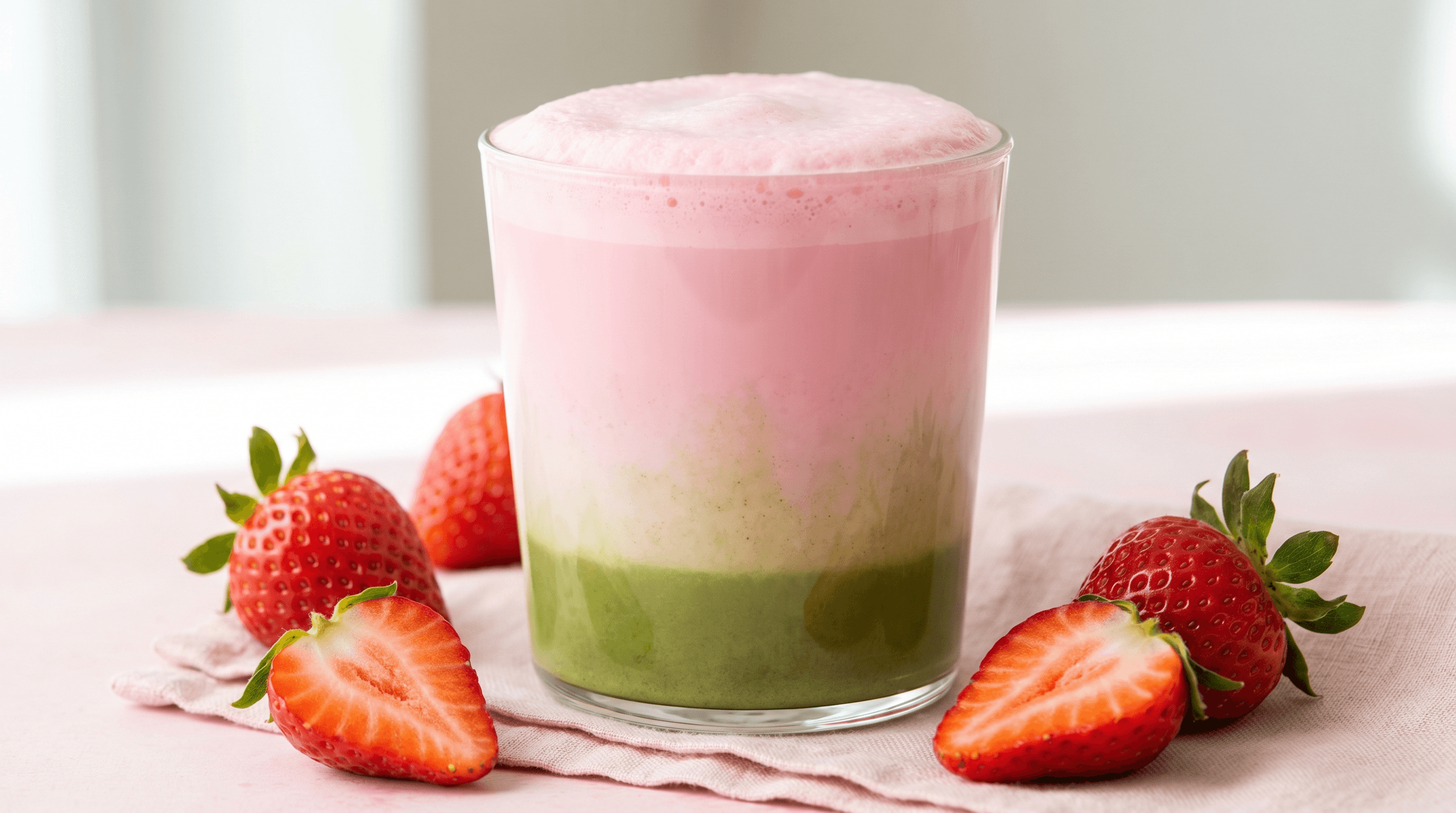
This is the version people photograph. The layers of pink syrup, white milk, and green matcha create a gradient effect that looks as good as it tastes. The key is pouring slowly and in the right order.
Ingredients
- 1.5–2g matcha powder — AURI Barista Matcha or Ceremonial Matcha
- 2 tablespoons hot water
- 1–2 tablespoons strawberry syrup
- 8oz cold milk
- Ice
Steps
- Sift and whisk the matcha. Same technique as above — sift, add hot water, whisk until smooth. Set aside.
- Build the layers. Pour the strawberry syrup into a tall glass (12–16oz). The syrup is denser, so it sinks to the bottom.
- Add ice. Fill the glass with ice cubes.
- Pour the milk. Slowly pour cold milk over the ice. The ice acts as a buffer and helps keep the layers distinct.
- Float the matcha. Slowly pour the whisked matcha concentrate over the back of a spoon onto the top of the milk. This creates the green layer on top.
- Admire, then stir. Take the photo, then stir it all together and enjoy.
Tips for Clean Layers
- Use a clear glass so you can actually see the gradient.
- Pour each layer slowly — rushing causes the colors to blend immediately.
- Colder milk holds layers better than room-temperature milk.
- A thicker milk (oat or whole dairy) separates more cleanly from the matcha than thin milks like almond.
Variations Worth Trying
Coconut Strawberry Matcha
Swap the milk for full-fat coconut milk (canned, diluted slightly with water). The tropical richness of coconut pairs beautifully with strawberry, and the fat content makes the latte extra creamy. This version barely needs sweetener.
Oat Milk Strawberry Matcha
Oat milk is the most popular plant milk for matcha lattes, and for good reason. Its natural sweetness and velvety texture complement both the matcha and the strawberry syrup. Use a barista-blend oat milk for the best froth.
Strawberry Matcha with Cream
For a richer drink, replace 2oz of the milk with heavy cream or half-and-half. This turns the latte into something closer to a dessert drink — great as an afternoon treat.
Strawberry Matcha Smoothie
Blend 1 teaspoon matcha, 1/2 cup frozen strawberries, 1 banana, 8oz milk, and a handful of ice. This skips the syrup entirely and uses the whole fruit, which adds fiber and a thicker consistency.
Nutrition Snapshot
A basic strawberry matcha latte (made with oat milk and 1 tablespoon of homemade syrup) comes in at roughly:
- Calories: 150–180
- Caffeine: ~60–70mg (from the matcha)
- Sugar: 15–20g (mostly from the syrup and milk — adjustable)
- Fat: 3–5g (depends on milk choice)
- Antioxidants: All the catechins, EGCG, and L-theanine from the matcha remain intact
Compare that to a café strawberry matcha from a chain, which typically runs 300–400 calories with 40–50g of sugar. Making it at home gives you complete control.
Choosing the Right Matcha for This Recipe
For flavored lattes like this, a barista-grade matcha is the sweet spot. AURI Barista Matcha has a bold, full-bodied flavor that cuts through the sweetness of the strawberry syrup without getting lost. It's designed specifically for blended drinks.
You can absolutely use Ceremonial Matcha if that's what you have on hand — the latte will taste smoother and more delicate. But ceremonial matcha shines brightest when you drink it straight or in a simple latte where its nuance can come through. For a strawberry matcha, barista grade gives you more bang for the flavor.
Make It a Weekly Staple
The beauty of this recipe is the prep-ahead factor. Make a batch of strawberry syrup on Sunday, keep it in the fridge, and you're two minutes away from a strawberry matcha latte every morning for the rest of the week. It's faster than a café run, cheaper, better for you, and — if we're being honest — more fun to make yourself.
Grab a bag of AURI Barista Matcha, cook up some syrup, and find your favorite ratio. That's it. Your new summer drink is ready.
Frequently Asked Questions
Can I use frozen strawberries for a strawberry matcha latte?
Absolutely. Frozen strawberries work great for the homemade syrup — they actually break down faster during cooking, which speeds up the process. Just thaw them slightly before adding to the saucepan. The flavor is nearly identical to fresh, especially when the berries are frozen at peak ripeness.
What type of matcha is best for a strawberry matcha latte?
A barista-grade matcha works best because its bolder flavor holds up against the sweetness of the strawberry syrup. Ceremonial matcha is more delicate and can get lost in a flavored latte. AURI Barista Matcha is designed specifically for drinks like this.
How long does homemade strawberry syrup last?
Stored in a sealed jar or bottle in the refrigerator, homemade strawberry syrup keeps for about 1-2 weeks. You'll know it's time to toss it if it starts to smell off or develop any mold. Making a batch at the start of the week sets you up for daily strawberry matcha lattes.
Related Articles
Ready to Try AURI Matcha?
Premium ceremonial-grade matcha from Uji, Kyoto.
Shop Now